

Send your location + project type + rough dimensions
We’ll reply with a project-specific recommendation and factory-direct quote within 24 hours.
A frameless glass balustrade system installed at a coastal residence in Queenscliff, Victoria, Australia. This case study examines the engineering decisions behind specifying 316-grade stainless steel hardware in a marine environment, the wind load calculations required for coastal balconies under Australian Standards, and how the glass panel layout preserved unobstructed views of Port Phillip Bay.
Project Overview
- Location: Queenscliff, Victoria, Australia
- Products: Frameless Glass Balustrade, Glass Spigot System
- Materials: 316 Stainless Steel Spigots (marine grade), 12mm Toughened Safety Glass (AS 1288 compliant)
- Guardrail Height: 1,000 mm — AS 1170.1 compliant for residential balconies
- Wind Region: Region A2 (non-cyclonic coastal) per AS/NZS 1170.2
- Corrosion Zone: C4-High (within 1 km of surf coast) per AS 4312
- Project Type: Residential
- Completed: 2023
The Challenge
Queenscliff sits on the tip of the Bellarine Peninsula at the entrance to Port Phillip Bay — a location that combines strong prevailing winds from Bass Strait with salt-laden air that accelerates metal corrosion. For a glass balustrade on a waterfront residence, this environment creates two simultaneous engineering challenges: the structure must resist higher wind loads than an inland installation, and every metallic component must survive long-term salt exposure without pitting, staining, or structural degradation.
Under Australian Standards, balustrade design for this site is governed by multiple interacting codes. AS 1170.1 (structural actions) requires residential balcony barriers to resist a minimum 0.75 kN/m horizontal line load at the top edge. However, AS/NZS 1170.2 (wind actions) may impose significantly higher loads depending on building height, terrain category, and shielding. For a two-story coastal residence in Wind Region A2 with Terrain Category 2 (open water frontage), the design wind pressure on a glass balcony panel can reach 1.5–2.0 kPa — producing forces on a 1.2 m wide panel that substantially exceed the code-minimum barrier load. The glass and hardware must be sized for the governing load case, which on this site is wind rather than occupant loading.
Corrosion classification adds another constraint. AS 4312 (atmospheric corrosivity) places Queenscliff in Category C4-High due to its proximity to the surf coast (less than 1 km). Standard 304-grade stainless steel, which is adequate for most inland and light-coastal applications, develops tea staining and surface pitting within 12–24 months in C4 conditions. This project required a material upgrade to 316 grade at minimum, with additional attention to surface finish quality — rougher finishes trap salt deposits and accelerate corrosion even on 316.
Project Gallery
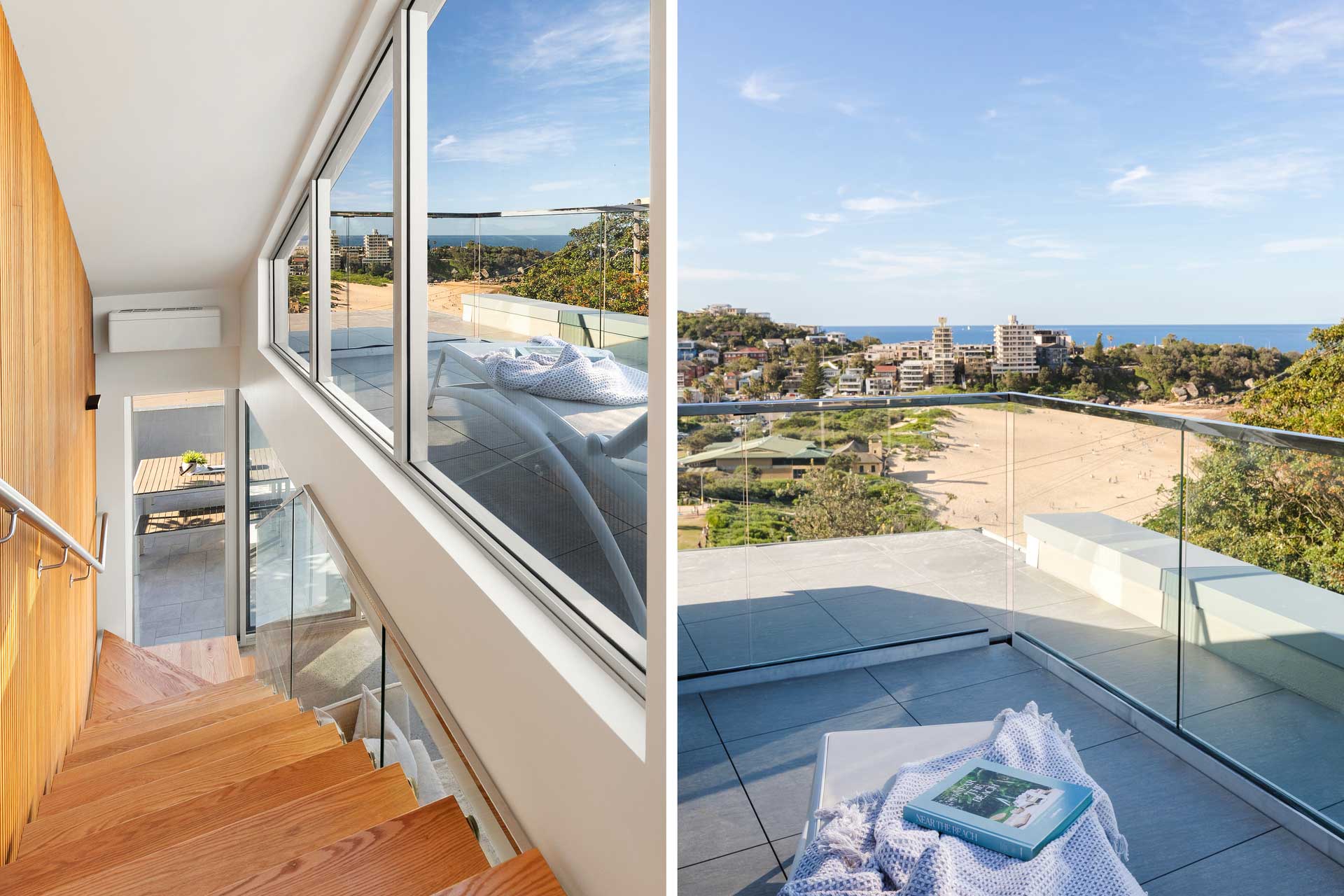
The hero image shows the completed balustrade from the interior looking outward — the orientation that defines the homeowner’s daily experience. The frameless glass delivers the unobstructed sightline the brief demanded: no posts, no top rail, and no horizontal members breaking the view plane. The 316 stainless spigots are visible at the base but their low profile means they disappear at normal viewing angles. This is the core value proposition of a spigot-based frameless system over channel or post-mounted alternatives — it moves the structural hardware below the sight line.
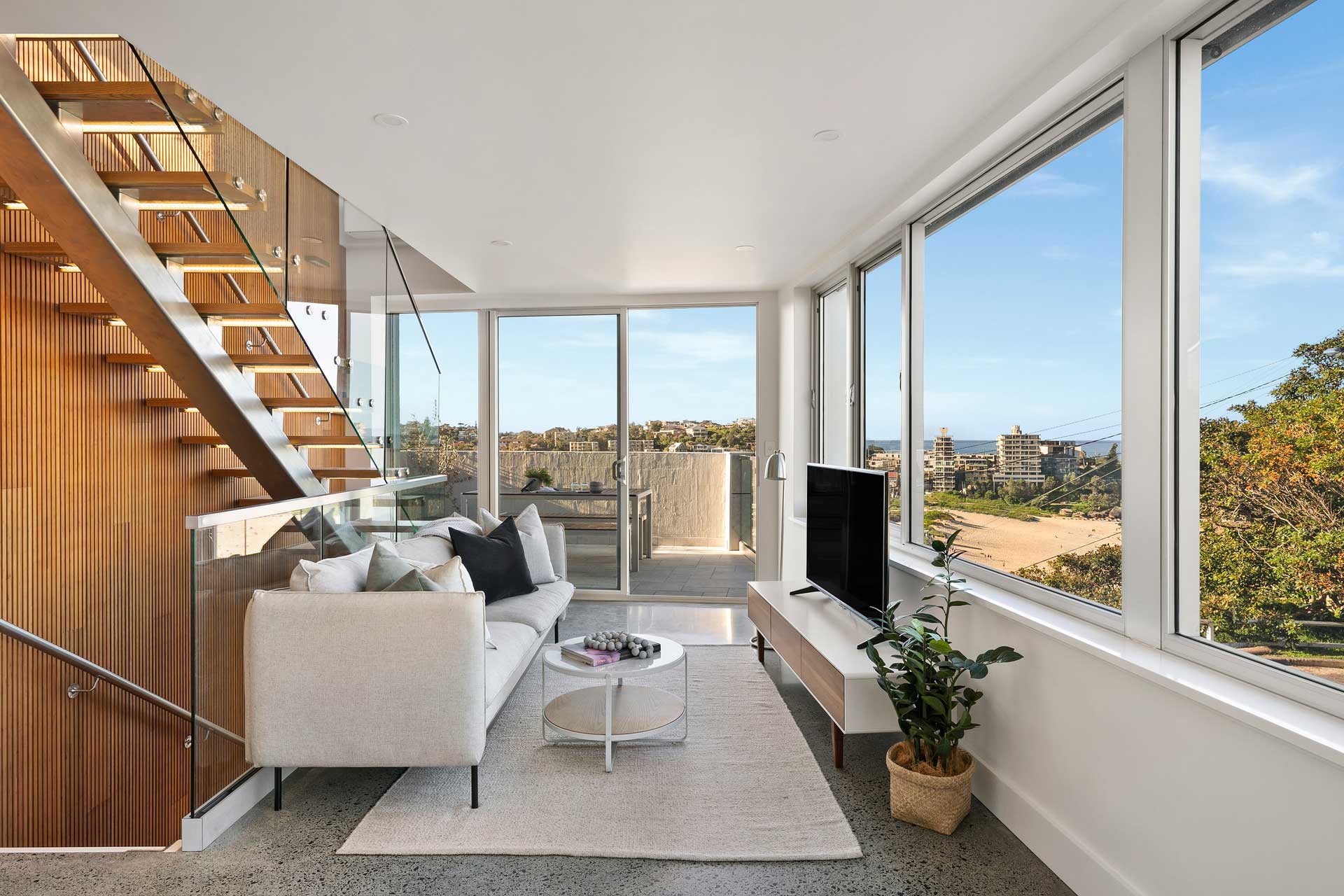
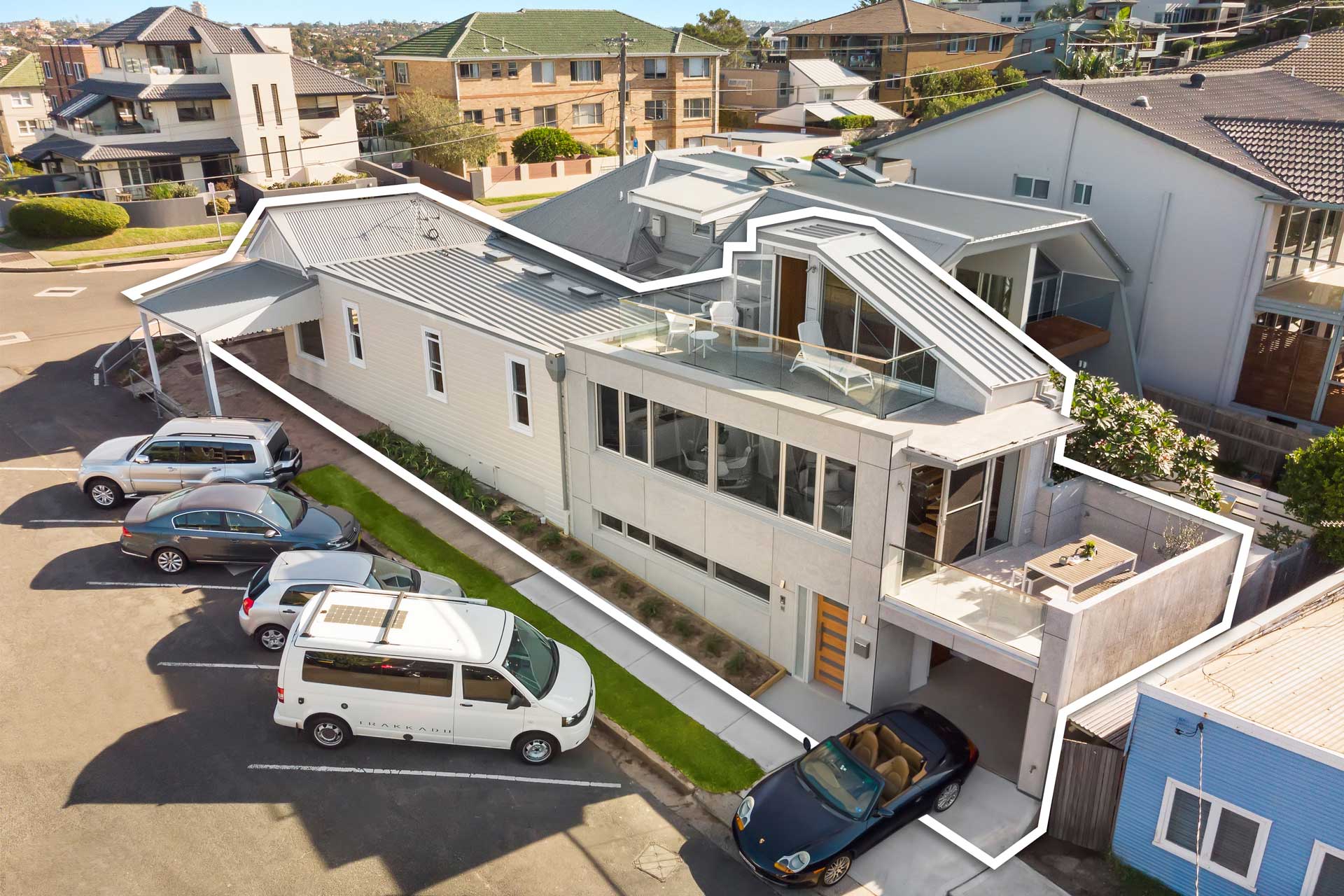
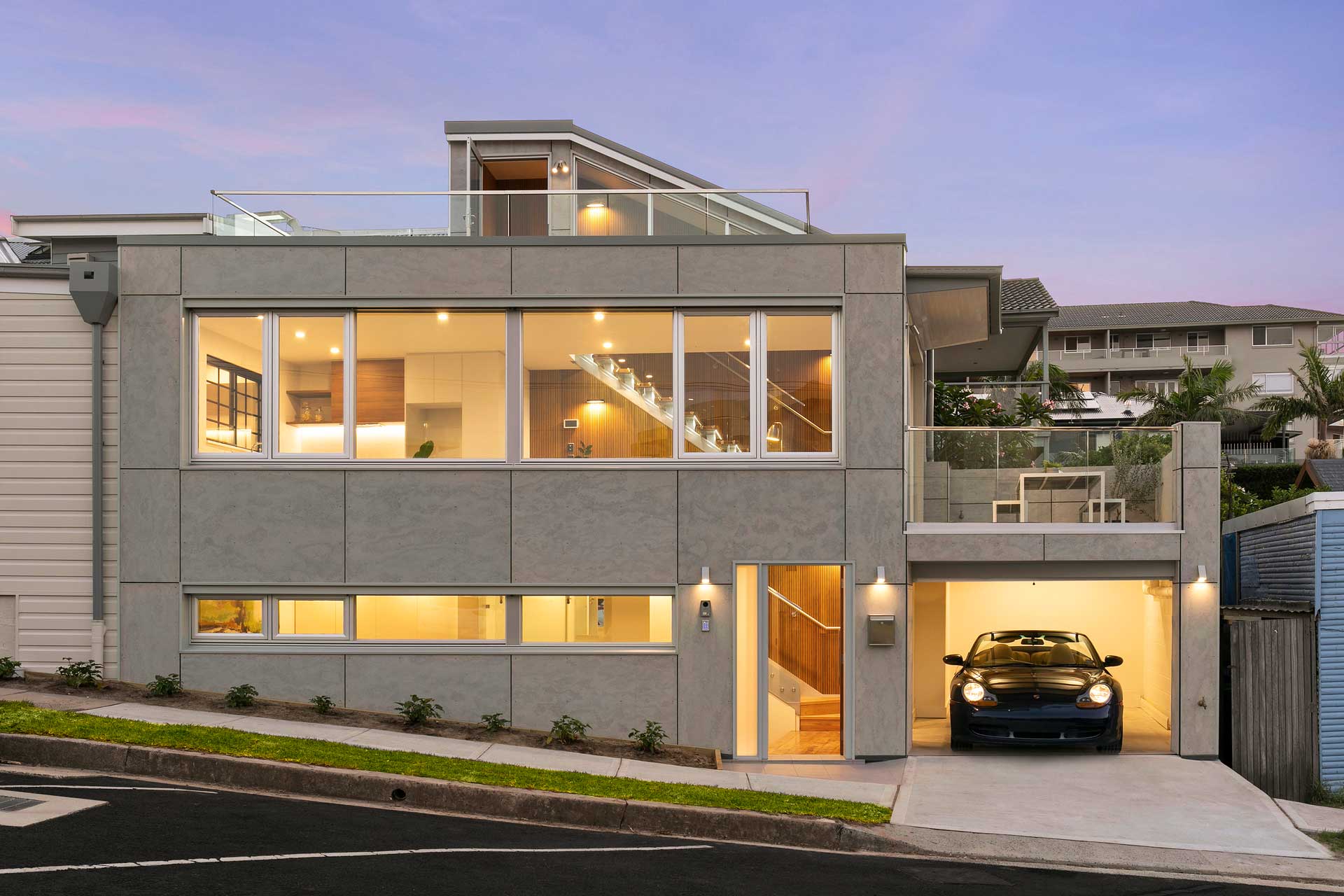
In the detail images, observe the spigot surface finish. Our frameless glass railing systems use a minimum 320-grit polished finish on all 316 stainless components for coastal applications. This is not purely aesthetic — a smoother surface (Ra ≤ 0.5 μm) sheds salt deposits more readily during rain washing and is easier to maintain with periodic fresh-water rinsing. In contrast, a rougher mill finish (Ra > 1.0 μm) creates micro-pockets where chlorides concentrate and initiate crevice corrosion, even on marine-grade alloys.

Our Solution
We specified the balustrade as a frameless spigot system — glass panels clamped at the base by individual point fixings with no top rail and no posts. This system type provides the maximum view area per linear meter of barrier, which was the primary design objective for this waterfront site.
316 Stainless Steel: Why Grade Matters in C4 Environments
The difference between 304 and 316 stainless steel is molybdenum content: 316 contains 2–3% Mo, which dramatically improves resistance to chloride-induced pitting. In quantitative terms, the Pitting Resistance Equivalent Number (PREN) of 316 is approximately 24–26 versus 18–20 for 304. The widely accepted minimum PREN for coastal applications is 25 — which puts standard 304 below the threshold and 316 just at or above it. For this reason, all spigot bodies, clamp plates, and anchor bolts on the Queenscliff project were specified as 316L (low-carbon variant for improved weldability and corrosion resistance in heat-affected zones).
- Spigot specification: 316L stainless steel bodies, core-drilled mounting with chemical anchors (M12 studs into reinforced concrete slab). Each spigot rated for 2.5 kN horizontal load at the glass top edge — exceeding the wind-governed design load for this site.
- Glass specification: 12mm toughened safety glass conforming to AS 1288, with heat soak treatment per AS 1288 Appendix A to reduce spontaneous nickel sulfide breakage risk. All panels were manufactured with polished edges (not arrissed) to minimize stress concentration points.
- Panel-to-panel clearance: 20 mm gaps between adjacent panels (within the AS 1170 requirement that openings not permit passage of a 125 mm sphere for balcony barriers). Gaps were left unsealed to allow wind pressure equalization across the panel face — sealed gaps in high-wind sites can create suction differentials that increase glass stress.
Wind Load Design Approach
Rather than designing to minimum barrier loads alone, we calculated the actual wind pressure at the installed height using AS/NZS 1170.2 parameters: Wind Region A2, Terrain Category 2 (open water within 500 m), and a topographic multiplier of 1.0 (no significant terrain amplification at this headland). The resulting design wind pressure of approximately 1.8 kPa at the balcony parapet height governed the spigot sizing and anchor specification. This is more than double the force produced by the code-minimum 0.75 kN/m barrier line load — which illustrates why coastal projects must perform wind calculations rather than relying on generic barrier load tables.
Delivery & Installation
The shipment from our factory to Queenscliff involved sea freight to Melbourne followed by road transport to the Bellarine Peninsula — total transit time approximately 28 days. Given the coastal destination, packaging was designed to prevent both physical damage and premature corrosion exposure:
- Glass panels: Vertically crated in sealed plywood A-frames with VCI (Vapor Corrosion Inhibitor) interleaving paper between panels and EVA foam edge protection. Each panel was marked with its installation position number.
- 316L stainless hardware: Individually wrapped in VCI bags and packed in moisture-sealed cartons with silica gel. Surface protection film was applied to all polished faces and specified for removal only after installation to prevent handling scratches that could compromise the corrosion-resistant surface layer.
- Anchor sets: Chemical anchor capsules (Hilti HIT-RE 500 V4 or equivalent marine-rated epoxy) were specified and sourced locally in Australia to ensure compliance with AS 5216 (design of post-installed and cast-in fastenings in concrete).
The installation team received a drawing package that included spigot layout coordinates (referenced to the building’s survey grid), core-drill depths and diameters, torque values for clamp bolts (18–22 Nm with calibrated torque wrench), and the critical glass-to-spigot gasket sequence. For projects where frameless glass guard detailing needs to interface with stair openings or level transitions, our stair and railing coordination reference provides tested detail templates that resolve these intersection conditions.
The Result
The completed balustrade delivers exactly what the brief asked for: an unobstructed 180-degree view of Port Phillip Bay and the Rip entrance, with no vertical posts, no top rail, and no visible horizontal members breaking the sightline. From inside the residence, the glass virtually disappears — the 12mm toughened panels produce minimal optical distortion, and the low-profile spigots sit below the natural line of sight from seated or standing positions.
Structurally, the system is engineered for the actual wind loads at this coastal location — not just the code-minimum barrier load. Each spigot’s 2.5 kN capacity provides a meaningful safety margin above the 1.8 kPa design wind pressure, accounting for gust factors and potential future code amendments that may increase wind load requirements for coastal structures. The 316L stainless hardware, combined with the 320-grit polished surface finish, is specified for the C4-High corrosion environment and should maintain its appearance with routine fresh-water rinsing (recommended quarterly in direct salt spray zones).
The client feedback (visible in the gallery images) confirmed that the frameless system achieved the design intent without the installation complexity often associated with channel-based alternatives — the spigot system allowed the installer to work from the deck side without requiring access to the building exterior, which simplified construction logistics on this elevated coastal site.
Sources & Disclaimer
- Project documentation, photography, and engineering data from Double Building Materials internal records.
- Material specifications verified against manufacturer data sheets for 316L stainless steel and toughened safety glass conforming to AS 1288.
- Building code references (AS 1170.1, AS/NZS 1170.2, AS 1288, AS 4312, AS 5216) are for general guidance only; Victoria may adopt amendments via the Building Code of Australia (NCC). Always confirm requirements with your local building surveyor or certifier.
Disclaimer: This case study is published for informational and portfolio purposes. Actual project specifications, timelines, and costs vary by location, scope, and site conditions. Coastal corrosion performance depends on specific microclimate conditions — confirm material grades and maintenance schedules with your specifier for your exact location. Contact us directly for a project-specific consultation.