

Send your location + application + rough dimensions
Share the project type, site location, and basic scope. We’ll reply with a practical recommendation and quote.
This Construct Canada show guide gives procurement-ready buyers a technical checklist for stair, railing, and guard system sourcing at Metro Toronto Convention Centre. Covers the key engineering questions to bring to the booth, how to evaluate supplier capability against NBC (National Building Code of Canada) requirements, and how Canadian winter construction constraints should shape your material specification conversations at the show.
Event schedules, booth locations, and procurement decisions should always be confirmed against the latest official show information and your final project scope.
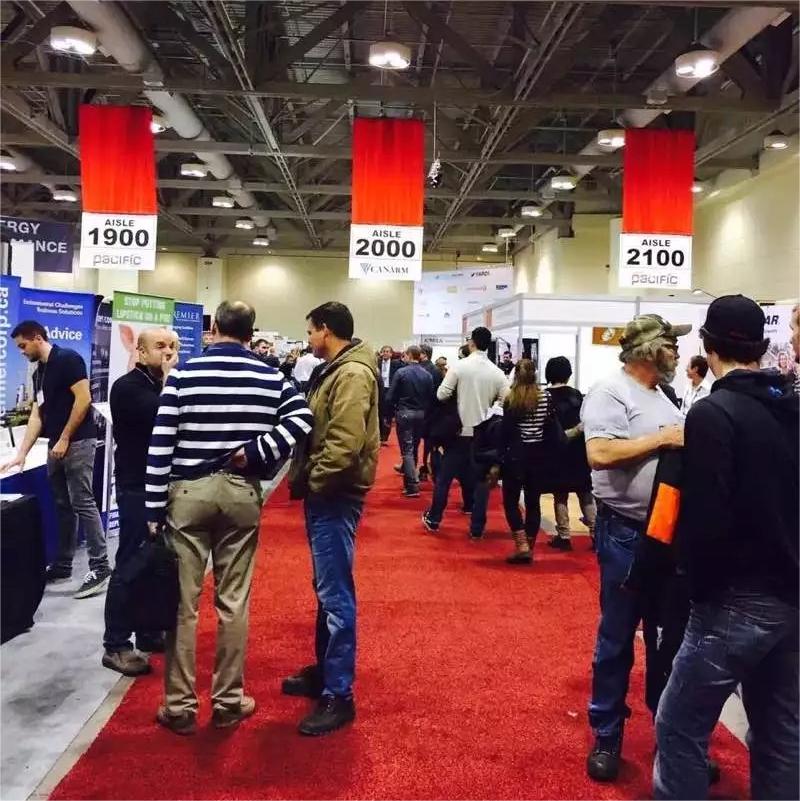
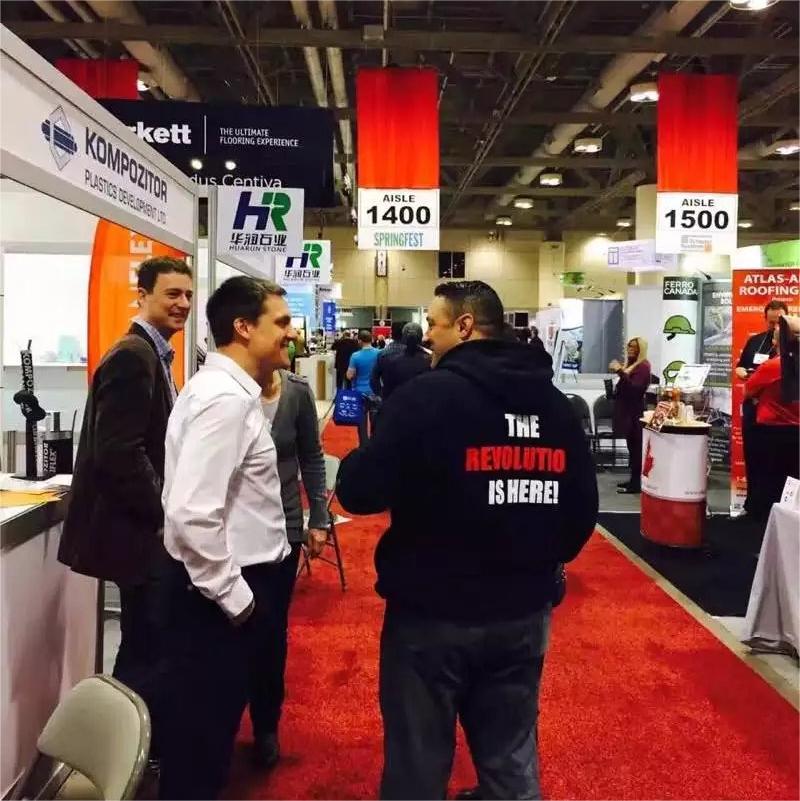
Why Construct Canada Matters for Stair & Railing Procurement
Construct Canada is the largest annual construction trade show in the Canadian market, held every November–December at the Metro Toronto Convention Centre. For stair and railing buyers, the show’s value is concentrated in one capability: the ability to compare multiple suppliers face-to-face and evaluate their engineering depth in a single visit. The critical distinction at a trade show is between suppliers who display finished products and suppliers who can discuss the engineering behind them — specifically, their familiarity with NBC Part 9 (Housing and Small Buildings) guard requirements, their material specifications for Canadian climate conditions, and their logistics capability for delivering to Canadian job sites during winter.
Before attending, benchmark the scope and specification language you’ll encounter at booths against a known reference. Our glass railing systems page, for example, provides the material grades, guard heights, and infill specifications that a serious supplier should be able to match or exceed in conversation — if a booth cannot answer questions at this level of specificity, they may not have the engineering depth to support a Canadian project through to installation.
NBC Code Questions to Ask Every Supplier
The National Building Code of Canada (NBC 2020) governs guard requirements differently from the IBC. Key questions to test a supplier’s Canadian market knowledge:
- Guard height: “What height do you specify for residential guards in Canada?” The correct answer is 1,070 mm minimum (NBC 9.8.8.1) — significantly higher than the IBC’s 36-inch (914 mm) residential requirement. Suppliers who quote 36 inches are applying US specifications to a Canadian project.
- Climbability: “How does your design address the NBC climbability provision?” NBC 9.8.8.5 restricts horizontal rails and other elements that could provide a foothold for children between 140 mm and 900 mm above the finished floor. This provision affects railing design more than most suppliers acknowledge.
- Snow load on exterior guards: “Do you account for snow accumulation loads on exterior balcony guards?” For Canadian projects, exterior guard systems in snow regions must accommodate both the 0.5 kN/m horizontal barrier load and the additional weight of snow and ice buildup on horizontal handrail and guard surfaces.
- Thermal movement: “How do your connections accommodate thermal expansion across a –30°C to +35°C annual range?” Canadian temperature swings are extreme — a 6-meter steel railing run will change length by approximately 4.7 mm between summer peak and winter low, which must be accommodated at splice joints.
Material & Finish Evaluation at the Booth
At the booth, inspect the actual material samples — not just the brochure images. Key evaluation points for the Canadian market:
- Powder coat quality: Ask for the DFT (dry film thickness) specification and whether the coating is standard polyester or TGIC/super-durable. For Canadian exterior applications, standard polyester will chalk and fade within 3–5 years under UV and de-icing salt exposure. Request samples that have been tested to AAMA 2604 or higher.
- Stainless steel grade: For coastal British Columbia or any exterior application, confirm whether the supplier offers 316L stainless. If they only stock 304, ask about their PREN rating awareness — this reveals whether they understand corrosion engineering or simply sell a standard product.
- Glass tempering certification: Ask whether their tempered glass conforms to CAN/CGSB-12.1 (Canadian General Standards Board) or only to ASTM C1048. Both are acceptable, but a supplier who knows the Canadian standard demonstrates deeper market knowledge.
- Weld quality: Inspect weld samples for consistency, undercut, and grinding quality. In the Canadian market, visible welds on a premium staircase are a deal-breaker for architects — the supplier should demonstrate that their welds are ground flush and invisible under the powder coat.
Canadian Winter Construction Constraints
A supplier’s awareness of Canadian winter logistics separates experienced exporters from those who treat Canada as “just another North American market”:
- Shipping timing: Container shipments arriving at Canadian ports (Vancouver, Montreal, Halifax) between November and March face cold-weather handling challenges. Steel components that arrive cold can develop condensation when brought into a heated building, causing surface staining before installation. Ask the supplier about VCI (Volatile Corrosion Inhibitor) packaging for winter shipments.
- Installation in cold: Powder-coated steel becomes brittle at low temperatures — impact during winter installation can chip the coating where it would flex at room temperature. Suppliers experienced in the Canadian market will recommend scheduling precision installation work (glass panel setting, handrail alignment) for above-freezing conditions, or at minimum, in an enclosed and heated space.
- Anchor adhesive temperature: Chemical anchors (epoxy or vinyl ester) used for post base plate connections have minimum cure temperatures — typically 5°C+. Winter installation in an unheated building may require temporary heating of the anchor zone. A supplier who knows this will flag it in the installation manual.
For multi-scope projects involving both stairs and railings, teams often cross-check supplier booth claims against our stair and railing coordination reference to verify that the supplier’s specification depth matches the complexity of the Canadian installation environment.
Post-Show Follow-Up Protocol
The real procurement value materializes after the show. Within 48 hours of the event, send your shortlisted suppliers the same RFQ package:
- Project drawings (even preliminary floor plans with stair openings dimensioned)
- Target guard height (confirm 1,070 mm for NBC compliance)
- Material preference (powder-coated steel vs. stainless steel vs. aluminum)
- Delivery province and nearest port/trucking hub
- Projected installation season (summer vs. winter — this affects packaging and scheduling)
Compare responses not just on price, but on specification completeness. The supplier who asks clarifying questions about your slab thickness, stringer material, or local building code jurisdiction is the one who will deliver a package that actually fits your project — not just the lowest quote.
Sources & Disclaimer
- Source material from Double Building Materials product specifications and trade show participation records.
- NBC references based on National Building Code of Canada 2020. Provincial building codes may impose additional requirements.
- Event schedules and booth details should be confirmed against the latest Construct Canada / Buildings Show official announcements.
Disclaimer: This article is published as a B2B sourcing guide. Product scope, event availability, lead times, and local code requirements vary by project and jurisdiction.