

Homeowner Guide
If you’re planning a custom kitchen remodel in 2026, cabinet materials matter. They affect how cabinets look, how they hold up, and how much you spend. So, this guide breaks down the most common options and how to pick the right mix.
Quick answer: Most kitchens use a mix of materials. For example, many homeowners choose plywood boxes for strength and MDF doors for a smooth painted finish. Meanwhile, solid wood is great for stained doors, but it costs more and can move with humidity.
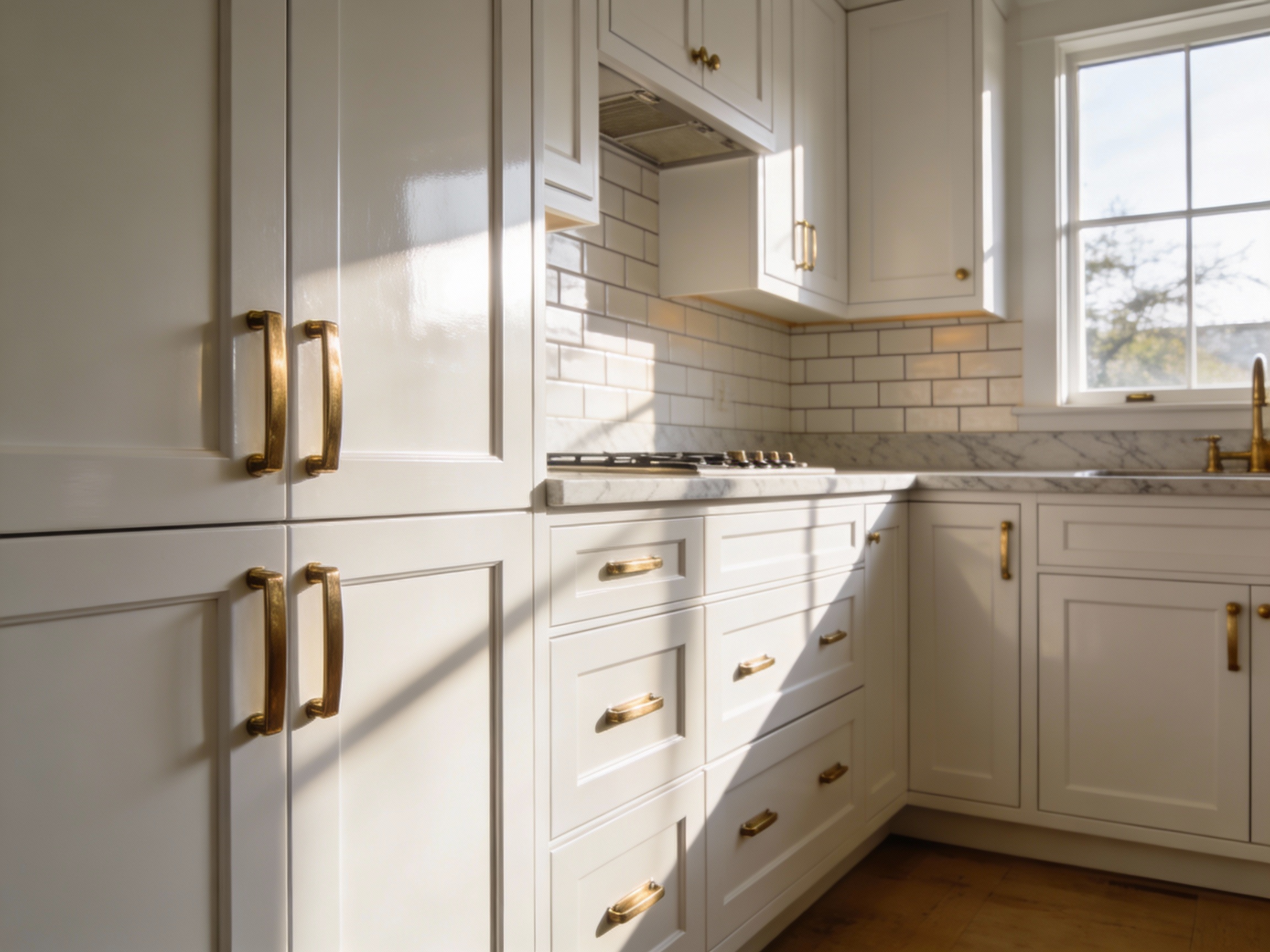
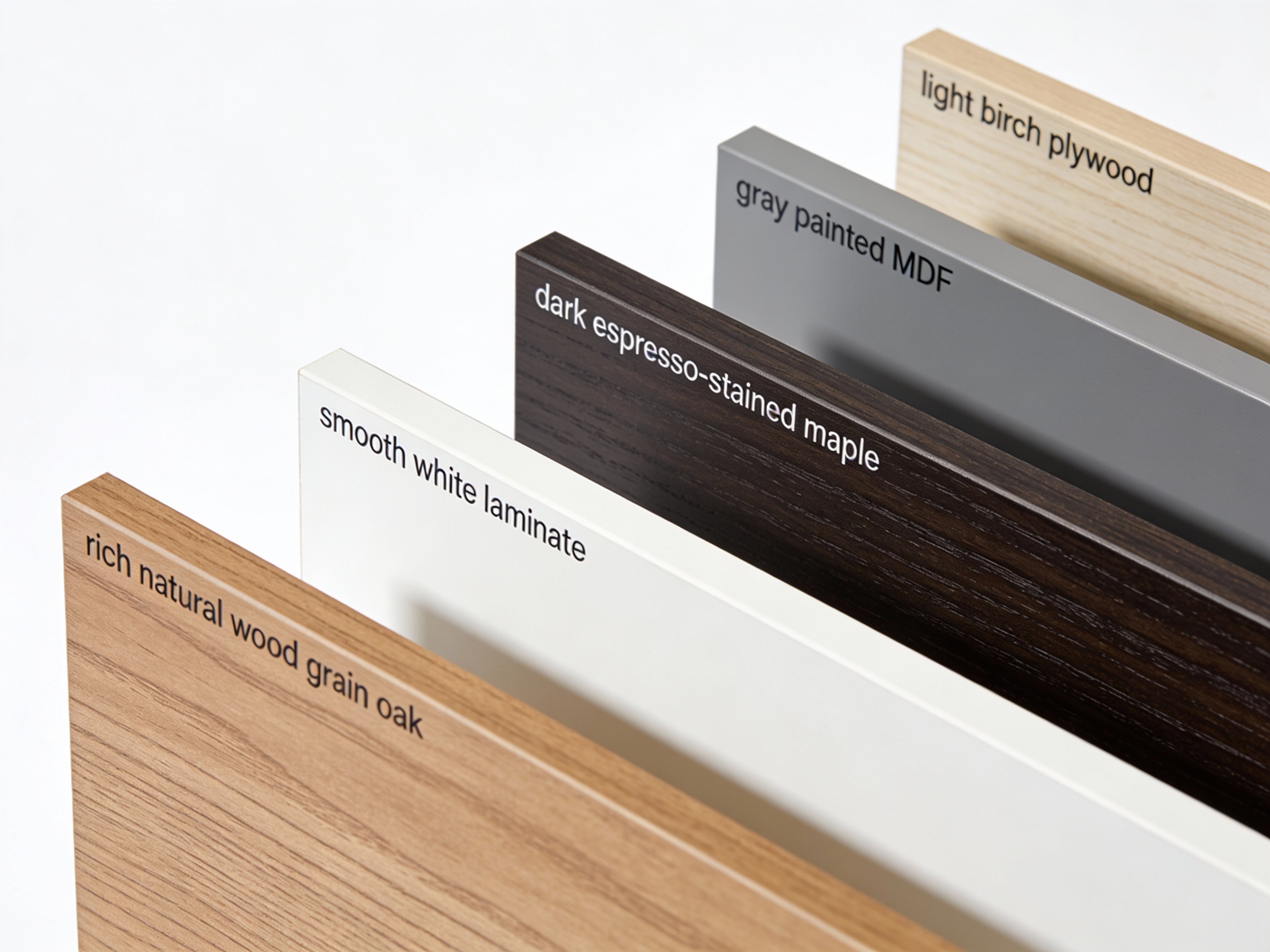
Overview of common kitchen cabinet materials
There is no single “best” cabinet material. Instead, the best choice depends on your finish, budget, and moisture risk. Therefore, it helps to understand what each material does well.
Solid wood
Solid wood doors and face frames have real grain and can be refinished. However, wood can expand and contract with humidity, so good finishing and construction are key.
- Best for: stained doors, classic styles, long-term value
- Watch for: higher cost; movement in very humid or very dry homes
Plywood
Plywood is made from thin wood layers glued with alternating grain direction. As a result, it stays stable and holds screws well. That’s why it’s commonly used for cabinet boxes.
- Best for: cabinet boxes, shelves, heavy everyday use
- Watch for: edges need banding or veneer to look finished
MDF (medium-density fiberboard)
MDF is smooth and consistent, so it’s popular for painted doors. Still, it must be sealed well, because it can swell if water gets in.
- Best for: painted doors, modern flat or simple profiles
- Watch for: avoid constant water exposure; seal edges carefully
Particleboard / HDF
Particleboard uses wood chips and resin. HDF is similar, but denser. They can lower cost; however, they are more moisture-sensitive than plywood.
- Best for: budget projects, low-stress areas
- Watch for: swelling near sinks; shelf sag in long spans
Laminate and thermofoil (finish systems)
Laminate and thermofoil are surface finishes, often applied over MDF. They are easy to wipe and come in many colors. On the other hand, edges can peel over time, and thermofoil can blister near high heat.
- Best for: easy cleaning, consistent modern looks
- Watch for: heat near ovens; edge durability and warranty terms
Pros and cons at a glance
If you want a simple shortcut, start here. Then, use the next section to match materials to your kitchen.
- Solid wood: beautiful + repairable; yet more expensive and can move with humidity.
- Plywood: strong + stable; still costs more than MDF and needs edge finishing.
- MDF: smooth for paint + cost-effective; however, it needs good sealing against water.
- Particleboard/HDF: lowest cost; but less durable in wet areas.
- Laminate/thermofoil: easy to clean + many styles; yet edges/heat are common weak points.
Best-value combo (common choice): plywood boxes + painted MDF doors. This mix is strong where it matters, and it keeps a clean painted finish. In addition, you can upgrade just the doors to solid wood if you want stain.
How to choose the right cabinet material mix
First, decide what matters most: budget, finish, or durability. After that, pick materials that support your top goal.
- Start with moisture risk: If you have kids, pets, or a busy sink area, choose stable boxes and good sealing. Therefore, avoid particleboard under sinks when possible.
- Match the material to the finish: For stained doors, solid wood is often the best fit. For painted doors, MDF can look very smooth. Meanwhile, laminate can be a good choice for easy wipe-down.
- Spend where you touch: Upgrade hinges, drawer slides, and pull-out storage first. As a result, the kitchen feels better every day.
- Ask about edges and sealing: Edge banding, veneering, and proper paint systems matter. In other words, “material” and “finish system” should be reviewed together.
- Confirm what’s inside the box: Some sellers use plywood doors but cheaper box cores. So, ask for box material details and photos.
Environmental and health standards (what to ask for)
Many engineered wood products use resins, so formaldehyde emissions matter. In the U.S., EPA rules under TSCA Title VI regulate formaldehyde emissions from key composite wood products (hardwood plywood, MDF, and particleboard), and the rules also apply to finished goods that contain them.
TSCA Title VI and CARB Phase II
If you’re in North America, ask if the cabinet materials are compliant with TSCA Title VI. Also, in California, CARB has a composite wood program that set strict formaldehyde emission standards for products like MDF and particleboard. Therefore, labels and documentation can help you confirm compliance.
KCMA / ANSI A161.1
Emissions are only one piece. Performance matters too. KCMA’s ANSI/KCMA A161.1 is a performance standard for factory-assembled kitchen and vanity cabinets. It focuses on performance and construction testing, not cabinet style or design. So, if you want proof of durability testing, ask about KCMA certification.
What to ask your supplier: box material (plywood/MDF/particleboard), door material, finish system (paint/laminate/thermofoil), and compliance documents (TSCA Title VI / CARB, and any KCMA certification details). Additionally, ask about warranty coverage around heat and moisture.
FAQ
What’s the difference between plywood and MDF?
Plywood is strong and stable, so it’s great for cabinet boxes. MDF is smooth, so it’s great for painted doors. However, MDF must be sealed well to avoid water damage.
Are solid wood cabinets always better?
Not always. Solid wood looks great and can be refinished. Still, high-grade plywood boxes can be very durable at a lower cost. Therefore, many homes mix plywood boxes with solid wood doors when stain is the goal.
Do laminate cabinets look cheap?
Not necessarily. Modern laminates can look very clean and consistent. That said, edge quality and heat resistance matter, so choose a reliable finish system and warranty.
How long do custom cabinets last?
With quality materials and good care, many custom cabinets last 20+ years. Generally, plywood and solid wood tend to outlast basic particleboard in wet areas.
Request a Quote
Ready to start your project? Send your kitchen layout (or measurements) and a few reference photos. Then we’ll recommend a material mix that fits your budget and finish goals.
Include: kitchen dimensions (or plan), ceiling height, appliance sizes, preferred door style, and your target finish (paint / stain / laminate). Finally, tell us your location so we can advise on shipping and lead time.