

Send your location + project type + rough dimensions
We’ll reply with a project-specific recommendation and factory-direct quote within 24 hours.
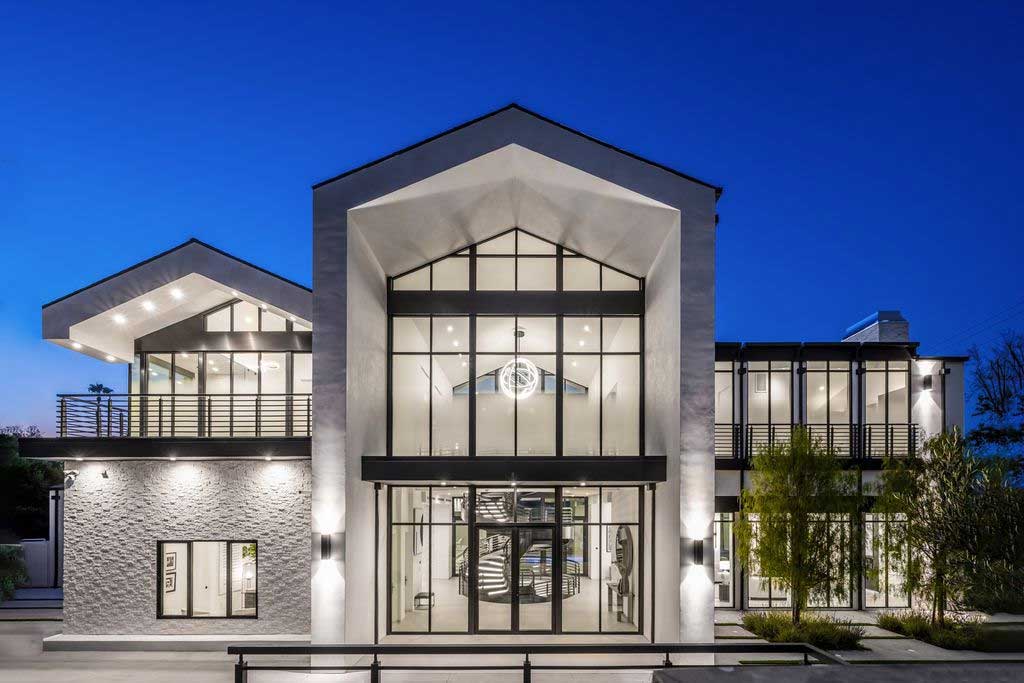
This curved staircase Beverly Hills project delivered a helical stair with glass balustrade and brushed stainless steel handrail for a luxury California residence. The case study examines the engineering requirements unique to California — including seismic design under CBC, the multi-viewpoint design methodology for high-end residential staircases, and why the coordination between curved steel geometry and curved glass templating determines the difference between a competent installation and a truly premium result.
Project Overview
- Location: Beverly Hills, California, USA
- Products: Curved Staircase, Glass Balustrade, Stainless Steel Handrail
- Materials: Carbon Steel Frame (Q235B, powder-coated), Curved Tempered Glass (12mm), Brushed 304 Stainless Steel
- Guardrail Height: 42 in (1,067 mm) — CBC / IBC §1015.3 compliant
- Seismic Design Category: D (high seismic zone per ASCE 7-22)
- Surface Finish: Brushed stainless (320-grit); stringer in RAL 9005 matte black
- Project Type: Residential (luxury)
- Completed: 2023
The Challenge
Beverly Hills represents the upper end of the residential staircase market — a context where engineering precision and aesthetic refinement are equally non-negotiable. The homeowner’s brief required a staircase that functions as the primary architectural feature of a double-height entry hall, visible from the front door, the upper gallery, and the adjacent living spaces. Unlike a utility stair that is viewed from one direction, this stair needed to read as a resolved composition from at least four distinct viewpoints — a requirement that exposed any geometric inconsistency between the curve, the glass, and the handrail.
California adds a regulatory layer that does not apply in most other US states: seismic design. Beverly Hills falls within Seismic Design Category D under ASCE 7-22 (the highest category for residential construction), which means the staircase must be designed to accommodate seismic drift between floors without structural failure. The California Building Code (CBC), which adopts IBC with California amendments, requires that non-structural components like stairs and railings either be rigidly connected to the structure at one end and allowed to slide at the other, or be designed to accommodate the calculated inter-story drift (typically 1–2% of story height for a residential structure in SDC D — approximately 30–60 mm for a 3 m floor-to-floor height).
For a curved staircase with glass railing, this seismic requirement has direct implications: the glass panels must have sufficient clearance in their mounting hardware to accommodate lateral movement without cracking, and the stringer connections must include a slip joint at one end to prevent the stair from acting as a rigid brace between floors during an earthquake. A stair that inadvertently braces two floors together can attract forces it was not designed for, potentially causing stringer buckling or anchor pullout.
Project Gallery
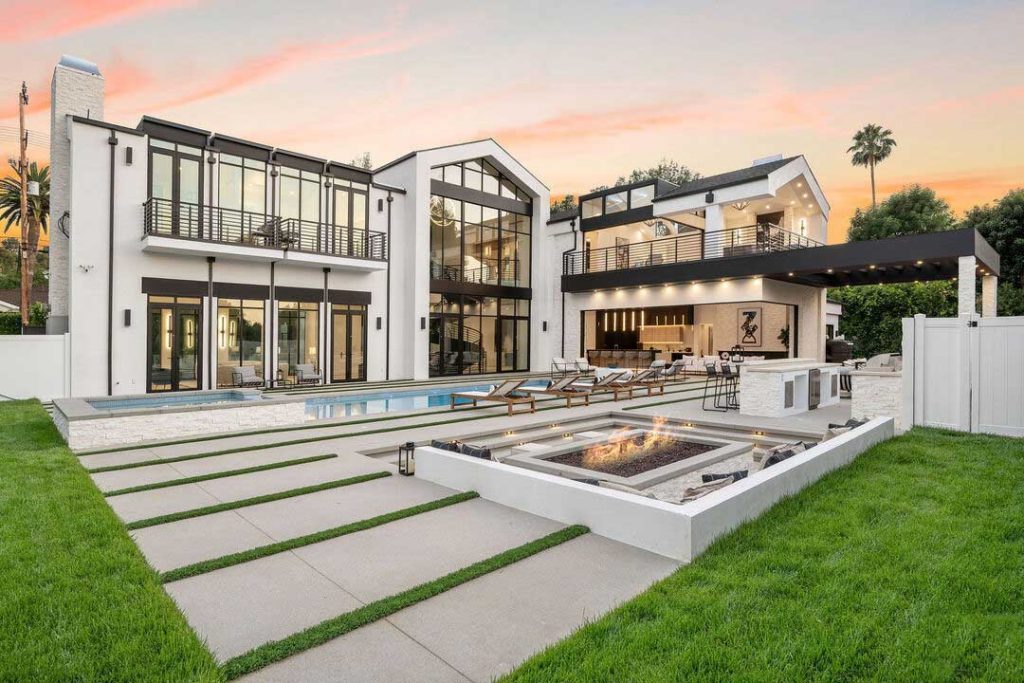
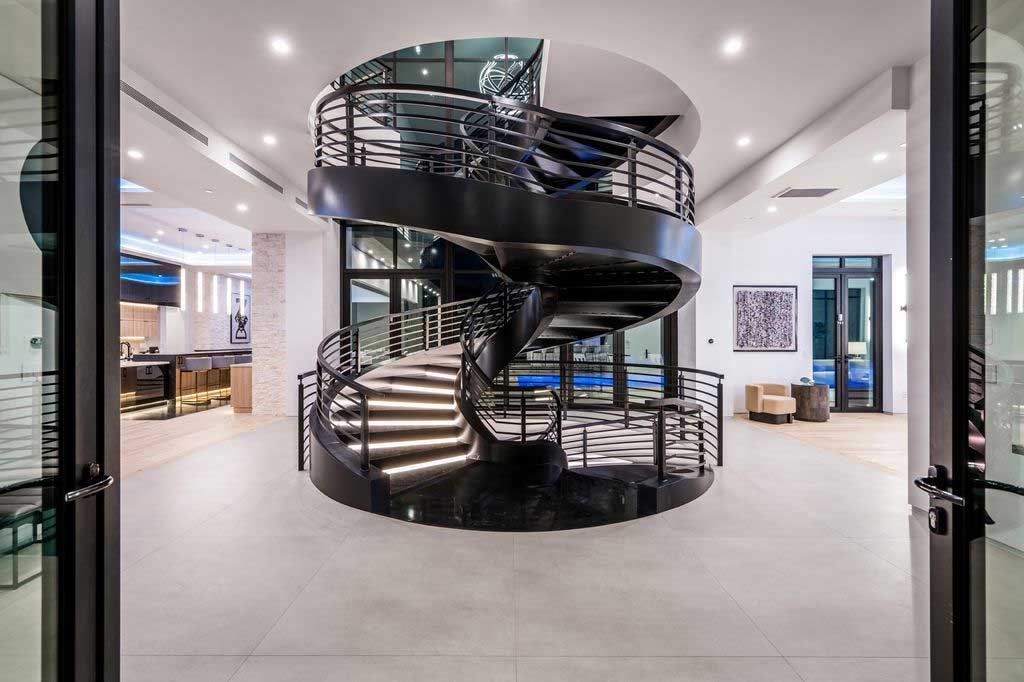
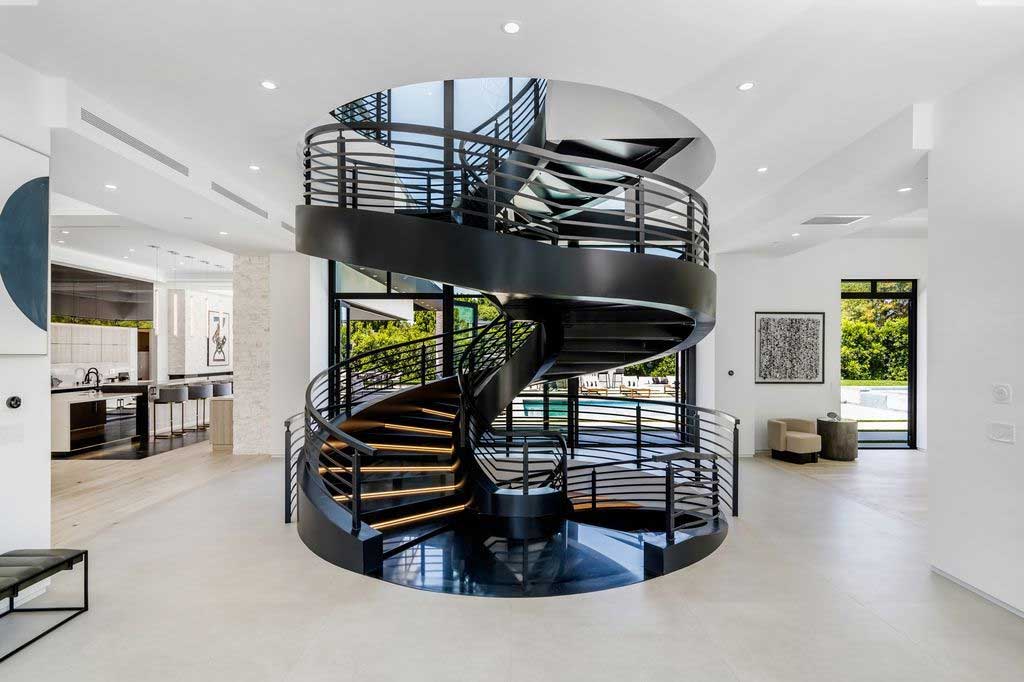
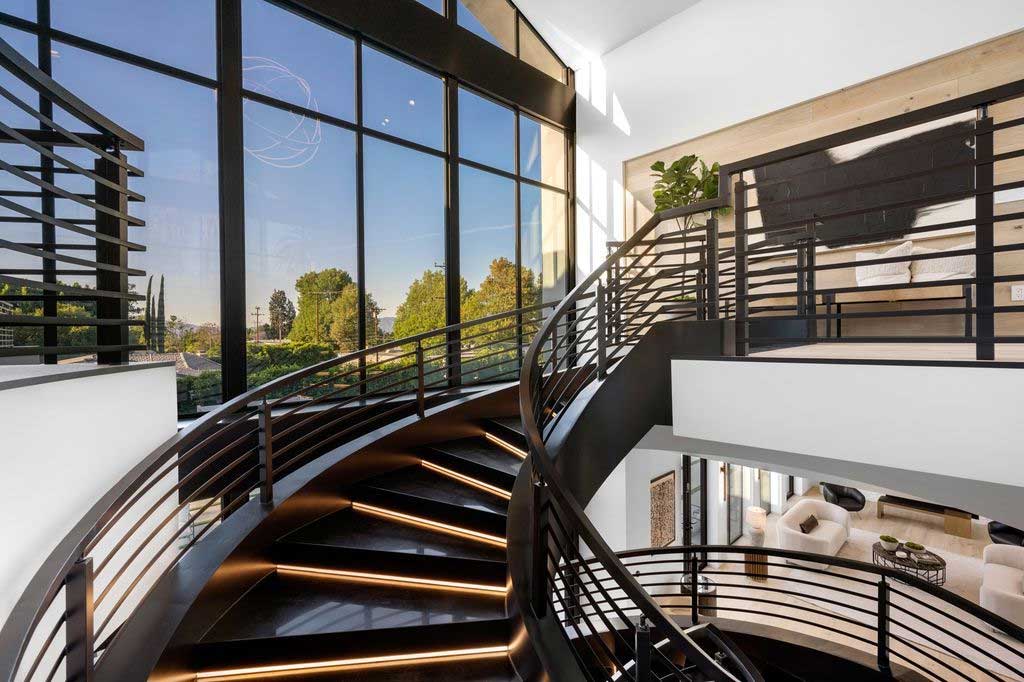
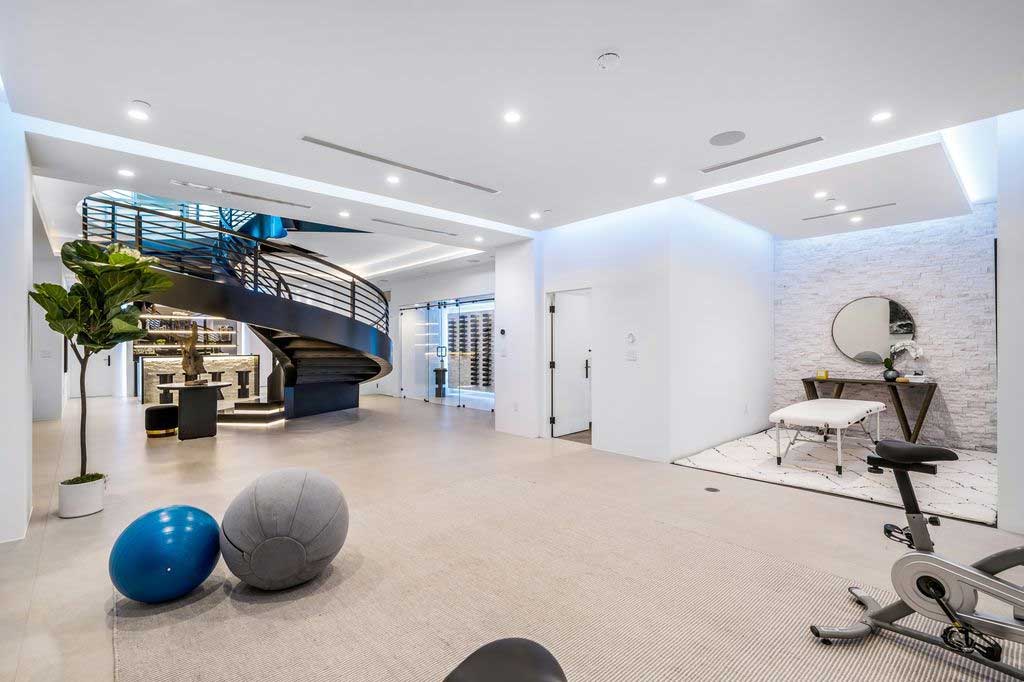
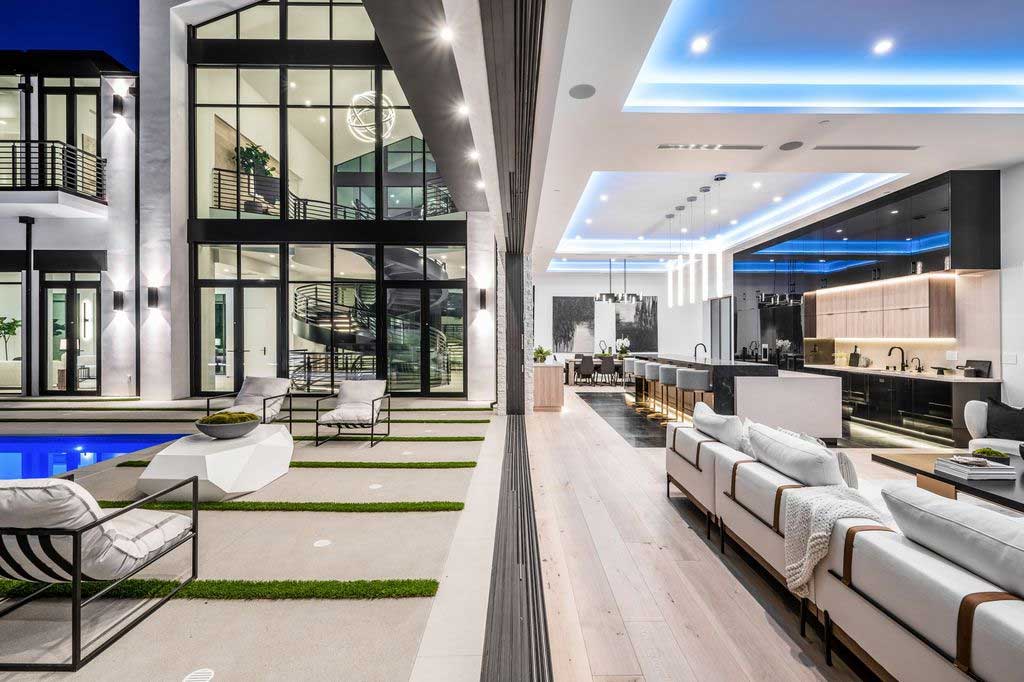
The panoramic hero image reveals why multi-viewpoint design matters. From this entry-level perspective, the staircase sweeps upward as a continuous sculptural form. The curved glass panels follow the stringer radius without angular breaks, the brushed stainless handrail maintains a consistent reflective line throughout the turn, and the matte black stringer recedes into the background to emphasize the transparency of the glass. This visual hierarchy — dark structure, clear glass, bright metal handrail — is deliberate and calculated to make the curve the dominant experience rather than the materials.
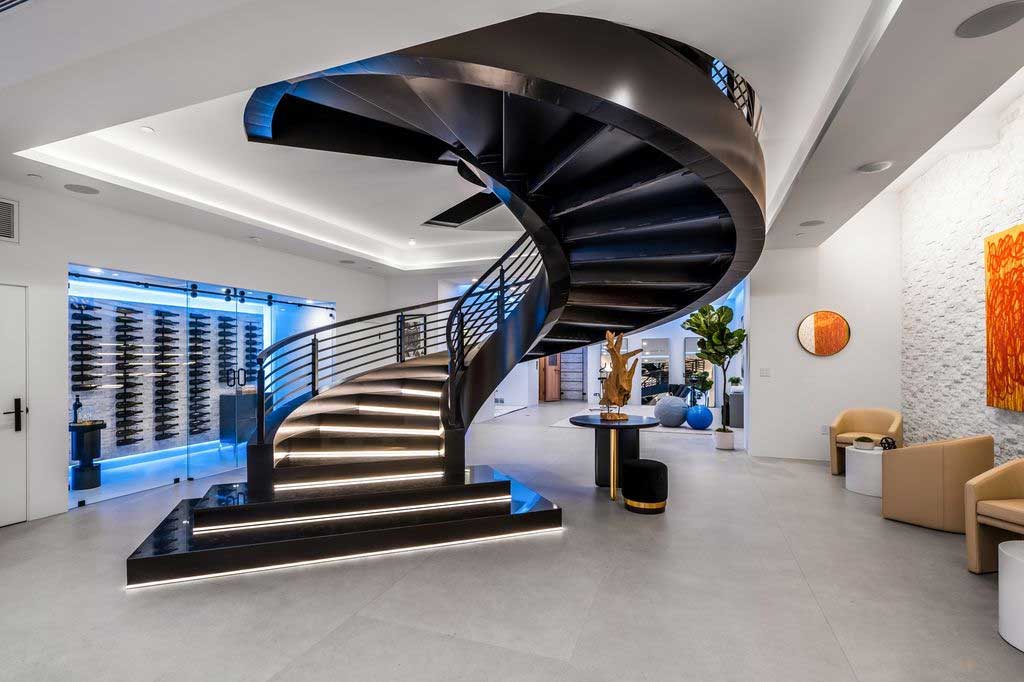
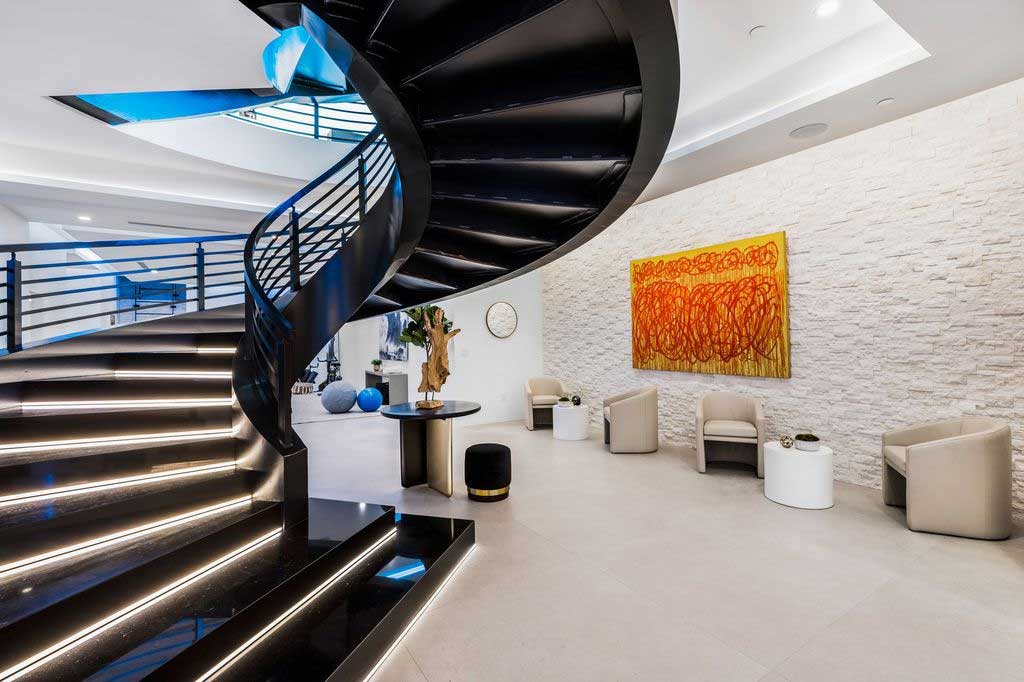
Our curved staircase systems are designed with this multi-viewpoint methodology: the 3D parametric model is reviewed from at least four camera positions (entry level, upper gallery, mid-stair ascending, and adjacent room) before the geometry is approved for fabrication. This catches proportion and alignment issues that single-view drawings miss.
Our Solution
Seismic-Accommodating Connection Design
The staircase uses a fixed connection at the upper landing (rigidly bolted to the structural slab) and a slotted slip connection at the ground floor. The slip joint consists of a base plate with slotted bolt holes that allow approximately 40 mm of lateral movement in any horizontal direction — exceeding the calculated inter-story drift for this building in SDC D. The spigot hardware for the glass panels also includes oversized gaskets that provide 3 mm of glass movement within the clamp, preventing seismic-induced glass cracking.
Material Specification
- 12mm curved tempered glass: Upgraded from 10mm (used in our New York project) because the panel widths on this Beverly Hills stair are wider (900–1,100 mm between spigots), requiring additional stiffness to meet the same deflection limits under the 200 lb IBC guardrail load. Each panel is hot-bent to the specific conical radius at its position on the curve.
- Brushed 304 stainless steel (320-grit): The brushed finish was specified to reduce fingerprint visibility and glare — both relevant in a Beverly Hills interior where the staircase faces large west-facing windows. The 320-grit provides a directional texture that catches light softly rather than producing the hard reflections of a mirror polish.
- RAL 9005 matte black powder coat on stringer: Applied at 80–100 μm DFT over SA 2.5 preparation. The matte finish absorbs rather than reflects light, allowing the stringer to visually recede and emphasize the glass and handrail elements.
Delivery & Installation
Beverly Hills residential delivery is more permissive than Manhattan — most homes have driveway access and ground-floor entry wide enough for large stringer sections. However, the finishing expectations are substantially higher: any scratch, dent, or misalignment that might be acceptable in a standard residential project is a callback in the luxury market.
- White-glove protection: All stringer sections were double-wrapped in quilted moving blankets over VCI film. Glass panels received individual plywood crates with EVA foam edge strips and corner protectors. The handrail was wrapped in adhesive surface protection film that remained in place until after all construction activity in the space was complete.
- Staged delivery: Components arrived in two separate shipments — steel structure first (installed over 2 days), followed by glass and handrail one week later (installed over 1.5 days). This two-phase approach prevents glass damage from construction activity during steel erection.
- Final detailing: After installation, the team performed a close-range inspection of every visible surface, connection, and transition point. Any powder-coat touch-ups were done with factory-matched repair paint applied by brush to maintain consistent finish quality.
For teams installing curved staircases in luxury residential markets, our stair and railing coordination reference includes white-glove installation protocols and finish protection procedures developed specifically for the premium market segment where cosmetic standards are highest.
The Result
The completed staircase achieves the brief: a sculptural centerpiece that reads as a single architectural gesture from every viewpoint in the double-height entry hall. The curved glass panels produce a continuous transparent barrier that preserves the spatial openness of the hall, while the brushed stainless handrail provides a warm, tactile guide along the curve. The matte black stringer disappears into the background, allowing the glass and metal to define the visual experience.
From an engineering perspective, the seismic slip connection at the base accommodates the inter-story drift required for SDC D without compromising the visual design — the slip joint is concealed beneath the finish floor and is invisible in the completed installation. The 12mm curved tempered glass meets the 200 lb IBC guardrail load requirement with measured mid-panel deflection under 6 mm — imperceptible under normal use but verified with a test load during the commissioning process.
The project demonstrates that factory-fabricated curved staircases can meet the dual demands of California’s stringent seismic code and Beverly Hills’ exacting aesthetic standards — provided the engineering, fabrication precision, and installation protocols are all calibrated to the luxury market level from the outset.
Sources & Disclaimer
- Project documentation, photography, and engineering data from Double Building Materials internal records.
- Material specifications verified against manufacturer data sheets for Q235B steel, 12mm curved tempered glass conforming to ASTM C1048, and 304 stainless steel.
- Building code references (California Building Code, IBC 2021, ASCE 7-22) are for general guidance only; City of Beverly Hills may impose additional requirements. Always confirm with your local building department or a California-licensed SE (Structural Engineer).
Disclaimer: This case study is published for informational and portfolio purposes. Actual project specifications, timelines, and costs vary by location, scope, and site conditions. Seismic design requirements vary by site classification — contact us with your project address for a site-specific recommendation.