

Send your location + project type + rough dimensions
We’ll reply with a project-specific recommendation and factory-direct quote within 24 hours.
This glass railing Tanzania project delivered a stainless steel and glass guard system for a residential property in Dar es Salaam. The case study covers the material engineering for East Africa’s tropical coastal climate — sustained high humidity, intense equatorial UV, and seasonal monsoon rains — and examines the logistics of delivering a factory-fabricated railing package to a market where local fabrication capacity for glass guard systems remains limited.
Project Overview
- Location: Dar es Salaam, Tanzania
- Products: Glass Railing, Stainless Steel Handrail, Stainless Steel Posts
- Materials: 316L Stainless Steel Posts and Handrail, 10mm Tempered Glass (EN 12150)
- Guardrail Height: 1,000 mm — aligned with BS standards commonly referenced in Tanzanian construction
- Climate Classification: Am (tropical monsoon, Köppen) — year-round temperatures 25–33°C, average RH 75–85%
- Project Type: Residential
- Completed: 2023
The Challenge
Dar es Salaam sits on the Indian Ocean coast at 6° south latitude — a location that combines tropical heat, year-round high humidity (75–85% average RH), intense equatorial UV, and seasonal monsoon rains. For metal hardware, this environment is classified as C4 (high corrosivity) under ISO 9223, matching or exceeding the aggressiveness of coastal Southern California or Southeast Asian port cities. Any railing system specified for Dar es Salaam must be engineered for continuous tropical exposure, not adapted from temperate-climate specifications.
Tanzania’s construction standards draw primarily from British Standards (BS), a legacy of the country’s colonial-era building code framework. While Tanzania has its own Bureau of Standards (TBS), residential construction in practice follows BS-aligned requirements for guard heights (typically 1,000 mm for stairs and floor edges), infill restrictions (100 mm sphere test), and structural loading (0.36 kN/m horizontal at top rail for domestic barriers). However, enforcement varies significantly by municipality and project type — in the emerging luxury residential market in Dar es Salaam’s Masaki and Oyster Bay neighborhoods, projects are increasingly following international standards with direct engineering oversight from firms familiar with BS, IBC, or Eurocode requirements.
The practical challenge was equally significant: Dar es Salaam has limited local fabrication capacity for precision glass railing systems. While basic steel fabrication and welding are widely available, the specific capabilities needed for glass railing production — CNC-controlled stainless steel tube bending, precision glass templating, and controlled powder coat or polishing processes — are not yet established at the quality level required for a high-end residential installation. This made factory-fabricated, pre-engineered components shipped from a specialized manufacturer the most reliable path to a precision result.
Project Gallery
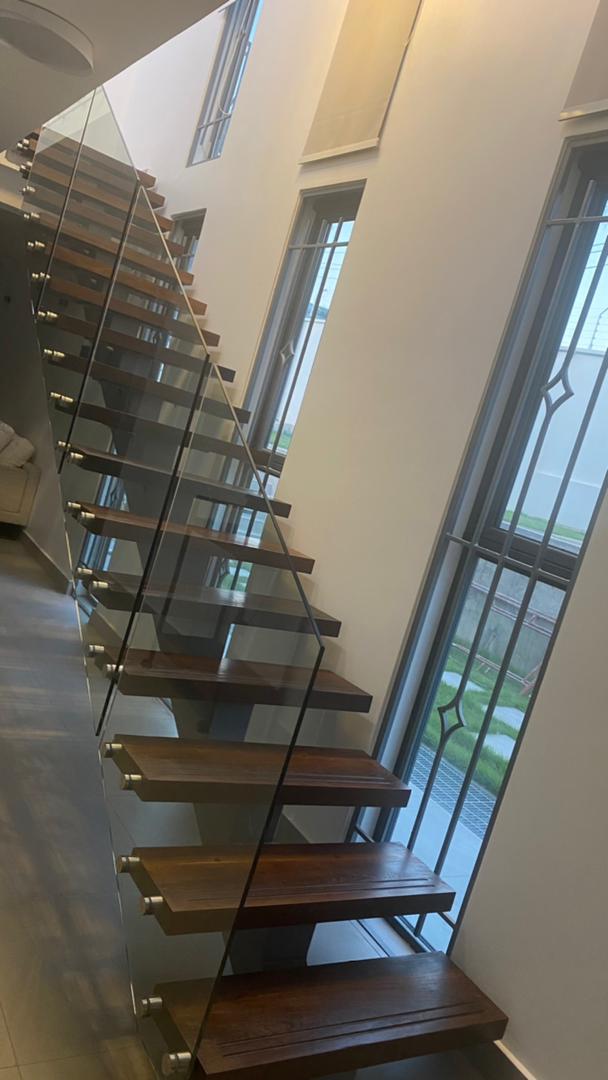
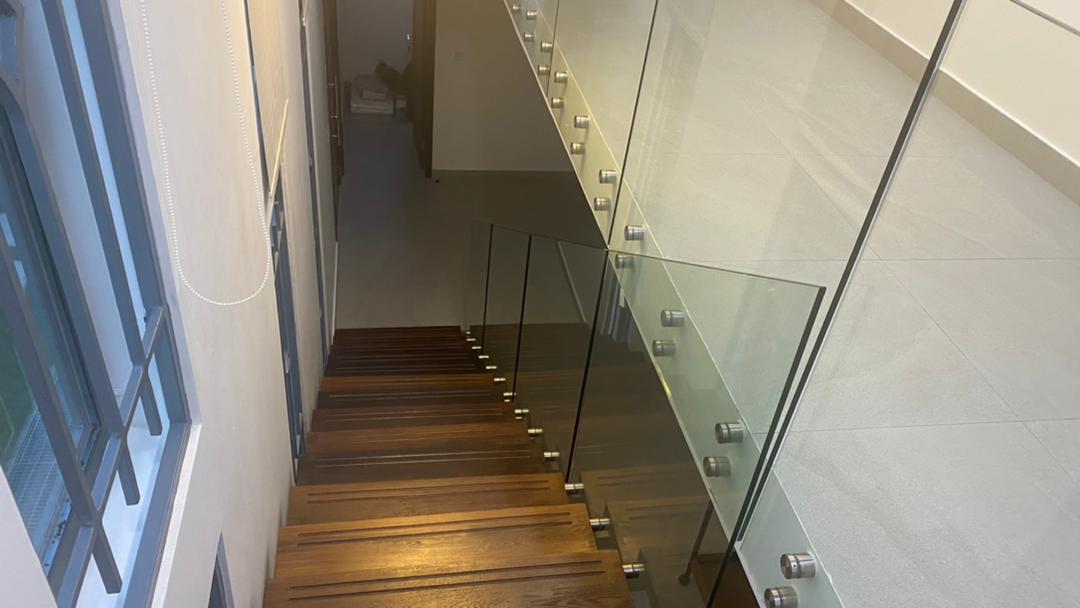
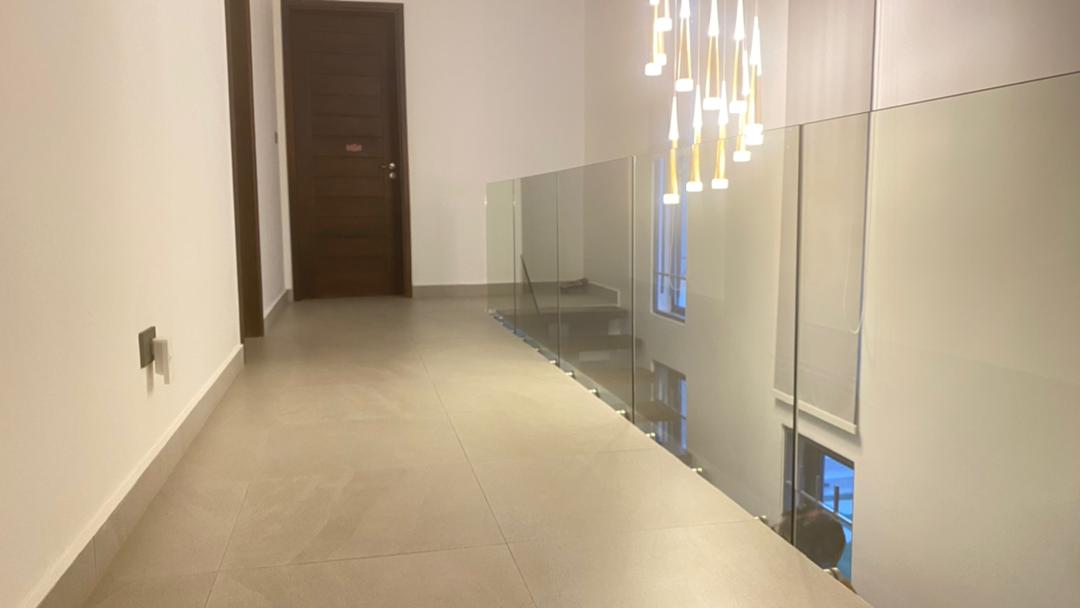
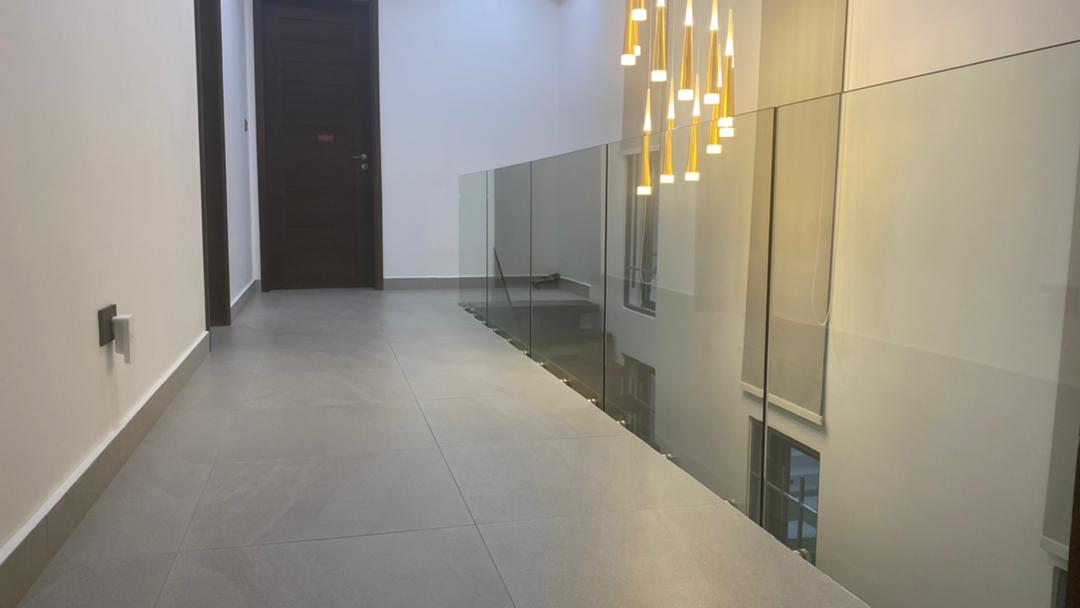
The hero image shows the completed glass railing in the Dar es Salaam residence. The 316L stainless steel posts and handrail display the consistent brushed finish that distinguishes factory-produced components from field-fabricated alternatives. In the tropical light, the glass panels provide visual transparency while maintaining the guard barrier required for upper-level floor edges. Our glass railing systems are available for delivery to East African markets, with 316L stainless steel specified as standard for any coastal installation in the tropical zone.
Our Solution
316L Stainless Steel for Tropical Coastal Exposure
All metal components were specified in 316L stainless steel (17Cr-12Ni-2.5Mo, PREN ≈ 25). The rationale is the same as for our San Diego coastal project — but in Dar es Salaam, the conditions are more severe. Where San Diego’s marine atmosphere is moderated by relatively low humidity (annual average 65%) and cool ocean currents, Dar es Salaam combines marine chloride exposure with sustained high humidity (80%+) and high temperature (28–33°C year-round). This combination accelerates the electrochemical corrosion process, making 304 stainless steel (PREN ≈ 18) unsuitable for exposed hardware.
- Posts: 50.8 mm (2″) round tube, 316L, wall thickness 2 mm, brushed to 320-grit. Post height 1,000 mm above finished floor.
- Handrail: 42.4 mm diameter 316L tube, continuous along each run. The 42.4 mm diameter provides a graspable profile suitable for residential use.
- Fasteners: All A4-80 (316 stainless) to prevent galvanic mismatch — the same fastener-matching protocol used in our San Diego project, but even more critical in Dar es Salaam’s higher-corrosivity environment.
- Glass clamps: Investment-cast 316L with EPDM gaskets. The EPDM is suitable for the operating temperature range (25–35°C continuous) and provides electrical isolation between glass and metal.
Glass Specification
- 10mm tempered glass: EN 12150 compliant, with heat soak testing per EN 14179-1. Heat soak testing is particularly important in tropical installations where the glass is exposed to sustained high ambient temperatures — the heat soak process screens for nickel sulfide inclusions that could cause spontaneous breakage at elevated temperatures.
- Edge treatment: Flat-polished edges to prevent moisture infiltration into micro-cracks that could propagate under tropical temperature cycling.
Anti-Microbial Consideration
In the tropical humidity of Dar es Salaam, organic growth (mold, mildew) on building surfaces is a constant maintenance issue. Stainless steel and glass are inherently resistant to biological colonization compared to painted or powder-coated surfaces — another advantage of the all-stainless specification. The smooth brushed finish on the 316L posts and handrail can be cleaned with a simple freshwater wipe, unlike textured or painted surfaces that can harbor organic growth in the surface profile.
Delivery & Installation
Shipping to Tanzania involves sea freight to the Port of Dar es Salaam — East Africa’s largest port and the primary entry point for construction materials. Total transit time was approximately 20 days. Logistics considerations specific to the Tanzanian market:
- Port clearance: Tanzania Revenue Authority (TRA) customs clearance requires a Pre-Shipment Verification of Conformity (PVoC) certificate for imported construction materials. The PVoC inspection was conducted at our factory before shipment, verifying material grades, dimensions, and quality against the purchase order specifications. This pre-shipment inspection prevents delays at Dar es Salaam port, where container dwell times can extend to 2–3 weeks if documentation is incomplete.
- Packaging for tropical transit: All stainless steel components were individually wrapped in VCI (Volatile Corrosion Inhibitor) film to prevent surface staining during the humid sea transit. Glass panels were crated in marine-grade plywood with moisture-barrier wrapping. The container included silica gel desiccant packs to control internal humidity during the 20-day voyage through the Indian Ocean.
- Installation support: Because local glass railing installation experience is limited, we provided a detailed visual installation manual (step-by-step photography, not just technical drawings) and offered video-call installation support during the critical phases — post anchoring, glass panel setting, and handrail alignment. This remote support model bridges the skills gap for markets where factory-trained installation crews are not yet locally available.
For projects in emerging East African markets where import documentation, remote installation support, and tropical packaging protocols are essential, our stair and railing coordination reference includes market-specific logistics checklists developed from our experience shipping to Tanzania, Kenya, and other East African destinations.
The Result
The completed railing brings a level of material precision and finish quality to the Dar es Salaam residence that demonstrates what factory-fabricated, pre-engineered components can achieve in the East African market. The 316L stainless steel hardware provides the marine-grade corrosion resistance needed for Dar es Salaam’s ISO 9223 C4 environment, while the tempered glass panels maintain the visual transparency and modern aesthetic that is increasingly sought in the city’s emerging luxury residential sector.
The guard system meets BS-aligned height (1,000 mm) and infill requirements (100 mm sphere test), with structural load capacity suitable for residential use. The all-316L specification — including matched A4-80 fasteners — eliminates the galvanic corrosion risk that is the most common cause of premature hardware failure in tropical coastal environments.
This project demonstrates the viability of shipping precision-engineered glass railing systems to East Africa — a market where the demand for high-quality residential finishes is growing rapidly but local fabrication capacity for glass guard systems has not yet caught up. The combination of factory quality, PVoC-compliant documentation, and remote installation support makes the delivered product competitive with the alternative of commissioning a local fabricator who may lack the specialized equipment and material supply chain needed for marine-grade glass railing production.
Sources & Disclaimer
- Project documentation and photography from Double Building Materials internal records.
- Material specifications verified against ASTM A240/A276 (316L stainless), EN 12150 (tempered glass), and ISO 9223 (atmospheric corrosivity classification).
- Building standard references (BS-aligned practices, TBS guidelines) are for general guidance only. Tanzanian construction projects should confirm requirements with the local municipal authority and registered engineer.
Disclaimer: This case study is published for informational and portfolio purposes. Actual specifications vary by project. East African projects require PVoC certification — contact us at least 4 weeks before planned shipment to coordinate inspection scheduling.