

Send your location + application + rough dimensions
Share the project type, site location, and basic scope. We’ll reply with a practical recommendation and quote.
BAU 2025 Munich: Best European Stair & Railing Buyer Prep Guide
This BAU 2025 Munich prep guide gives procurement-ready buyers actionable content for the European stair and railing market at Messe München. Covers how to evaluate suppliers against DIN/EN standards and Eurocode structural requirements, the CE marking and Declaration of Performance (DoP) documentation that determines whether imported components can legally be installed in the EU, and the precision tolerances that German and Northern European specifiers expect.
Event schedules, booth locations, and procurement decisions should always be confirmed against the latest official BAU information and your final project scope.
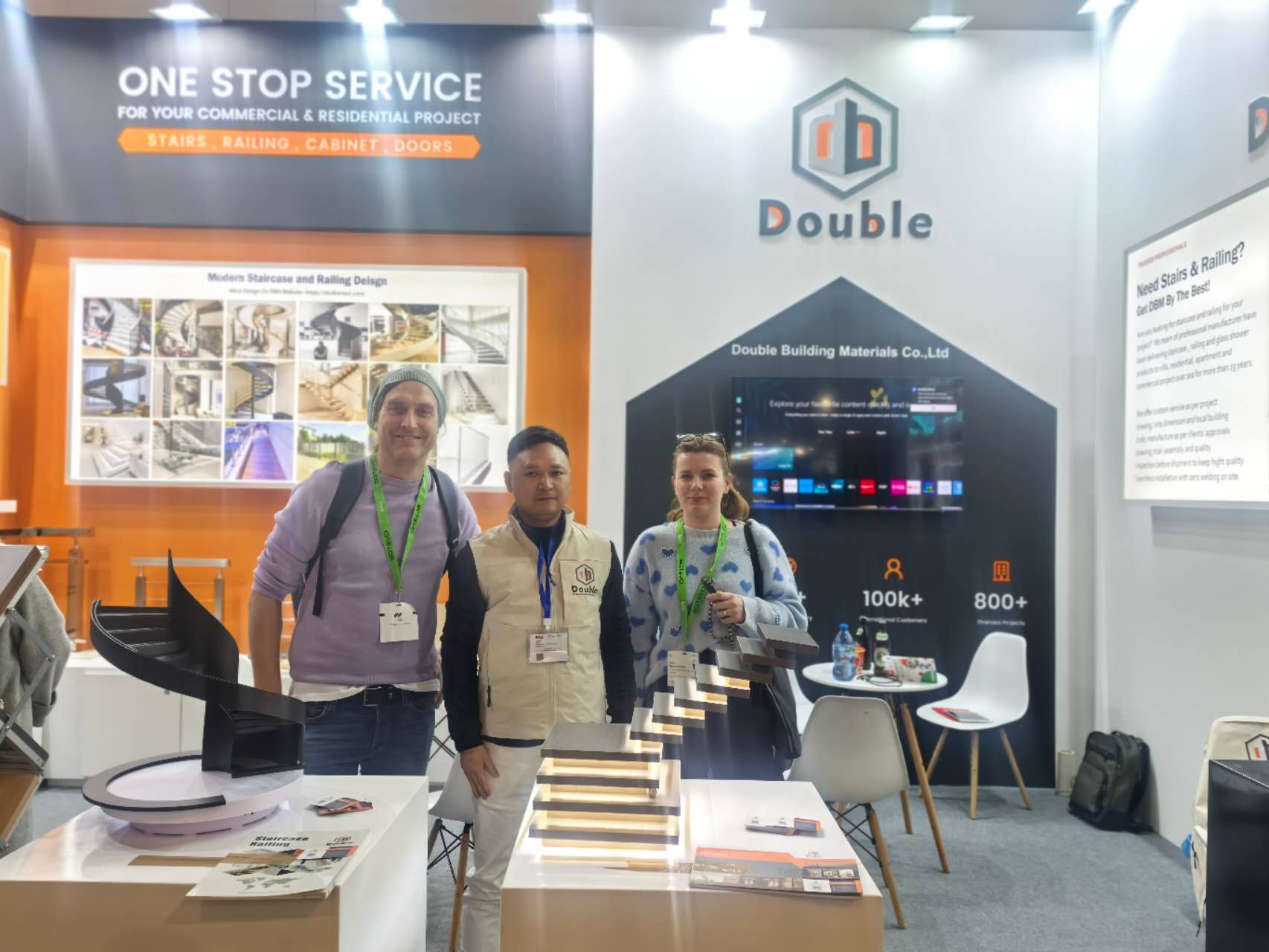
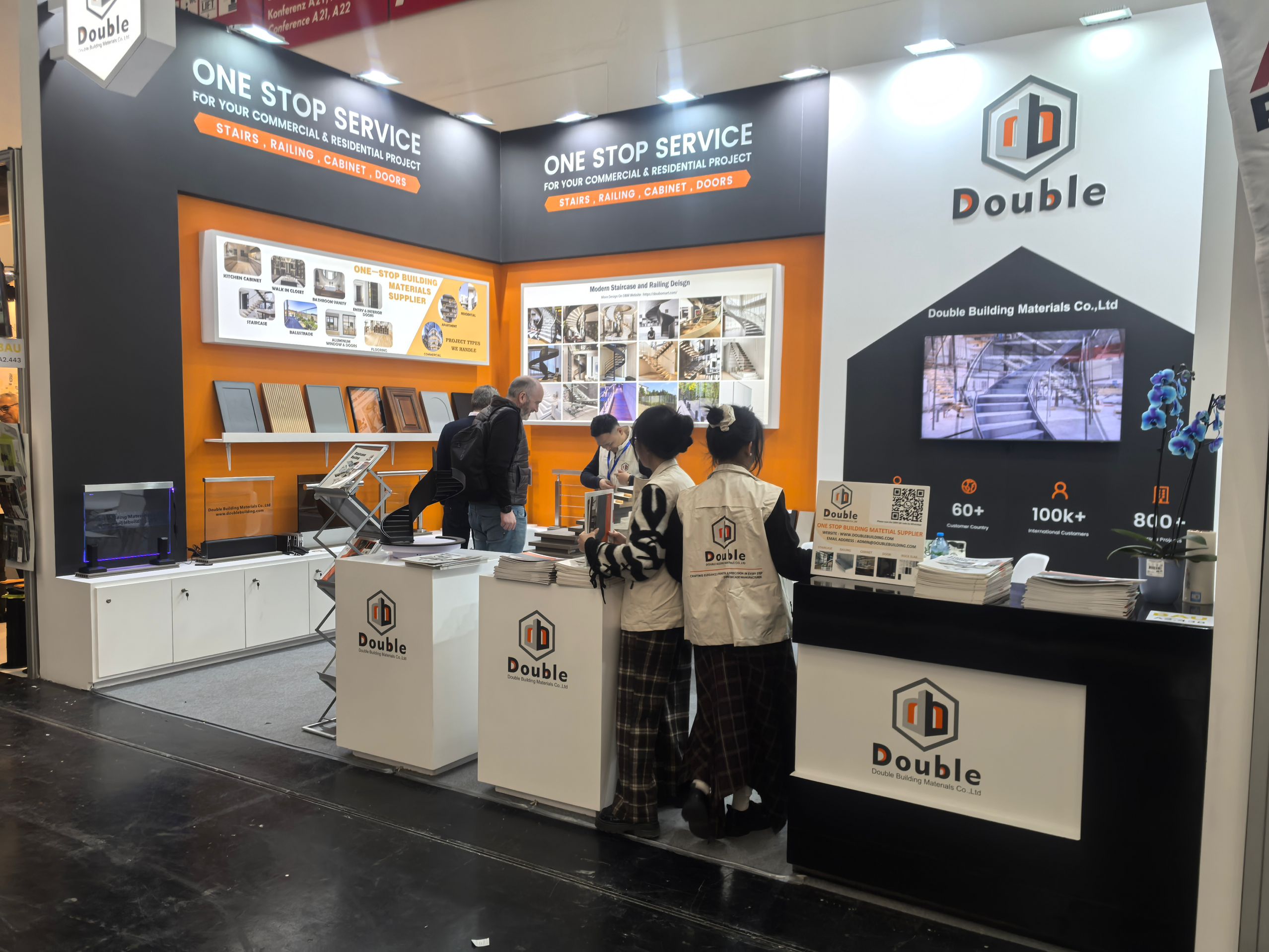
Why BAU Matters for European Stair Procurement
BAU (Messe München, held biennially in January) is the world’s leading trade fair for architecture, materials, and building systems. Unlike regional shows, BAU draws decision-makers from across the EU, UK, Scandinavia, and Eastern Europe — making it the most efficient venue for evaluating staircase and railing suppliers against the full spectrum of European regulatory requirements.
For stair and railing procurement, BAU’s value lies in the European market’s uniquely demanding regulatory environment. The EU Construction Products Regulation (CPR), CE marking requirements, and the harmonized EN standard framework create a compliance barrier that many non-European suppliers cannot clear. At BAU, the question is not “can this supplier make a nice staircase?” — it is “can this supplier deliver a product with the documentation package required to legally install it in Germany, France, the Netherlands, or Scandinavia?”
Before attending, establish your technical baseline. Our glass railing systems page includes the material specifications, guard heights, and structural loading requirements that EU-capable suppliers should be able to discuss fluently — if a supplier at BAU cannot reference EN 1991 loading or EN 12150 glass standards by name, their European market readiness is questionable.
DIN/EN Standards: The Questions That Separate Suppliers
The European standards framework for stairs and guards is built on harmonized EN standards, with national annexes (DIN in Germany, NF in France, BS in the UK). Key evaluation questions for BAU:
- Structural loading: “Which Eurocode do you design to for guard loading?” The correct framework is EN 1991-1-1 (Eurocode 1: Actions on Structures). For residential guards in Germany, the horizontal line load is 0.5 kN/m at handrail height; for public buildings, 1.0 kN/m. Suppliers who quote IBC’s 200 lb (0.89 kN) concentrated load are applying the wrong standard.
- Guard height: “What height do you specify for guards in Germany?” DIN 18065 (Stairs in Buildings) specifies minimum guard heights that vary by building type: 900 mm for residential stairs (≤12 m fall height), stepping up to 1,100 mm for fall heights exceeding 12 m. This graduated system is more nuanced than the IBC’s flat 42-inch commercial requirement.
- Glass standard: “Does your tempered glass conform to EN 12150?” This is the harmonized European standard for thermally toughened soda lime silicate safety glass. Suppliers offering ASTM C1048-only glass may need additional testing or certification to satisfy EU requirements.
- Stair geometry: DIN 18065 specifies the “Schrittmaßregel” (step formula): 2R + G = 590–650 mm (where R = rise, G = going). Ask the supplier: “What rise-going ratio do you use for German residential stairs?” — the answer should reference this formula, not just IBC Table 1011.5.2.
CE Marking & Declaration of Performance
This is the make-or-break compliance question for any supplier selling into the EU market:
- CE marking: Under the EU Construction Products Regulation (CPR, Regulation 305/2011), construction products covered by a harmonized European standard (hEN) must carry CE marking. For steel structural elements, EN 1090 (Execution of Steel Structures) requires the fabricator to hold EN 1090 certification — issued by a Notified Body. Ask at the booth: “Do you hold EN 1090 certification? What execution class (EXC) do you fabricate to?” EXC2 is typical for staircases; EXC3 may be required for public buildings.
- Declaration of Performance (DoP): Every CE-marked product must be accompanied by a DoP specifying its essential characteristics. Ask the supplier for a sample DoP — if they cannot produce one, their products cannot legally be placed on the EU market under CPR.
- Factory Production Control (FPC): EN 1090 certification requires an FPC system audited by a Notified Body. Ask about the supplier’s FPC audit schedule and their Notified Body designation number. This is the most demanding element of EU compliance for non-European fabricators — and the one most frequently lacking.
German-Market Precision Expectations
Germany and Northern Europe have fabrication tolerance expectations that exceed most other markets:
- Dimensional tolerances: DIN 18202 (Tolerances in Building Construction) specifies tighter dimensional tolerances than typical factory standards. For a 3-meter stringer, the length tolerance is ±3 mm — some German specifiers expect ±1 mm. Ask the supplier about their QC measurement protocol and equipment (laser measurement, CMM, or tape measure).
- Surface finish quality: German architects and interior designers expect finish quality comparable to furniture-grade metalwork. Weld grinding must be invisible, powder coat must be free of orange peel, and stainless steel brushing must be uniform and directional. Bring a jeweler’s loupe to BAU and inspect the booth samples at 10× magnification — this is how German QC inspectors evaluate delivered product.
- Packaging standards: German building sites typically have strict waste management requirements. Ask whether the supplier’s packaging is recyclable and whether they can provide packaging take-back documentation — a detail that matters to sustainability-conscious German contractors.
For multi-scope European projects where staircase and railing must meet DIN/EN compliance as a coordinated package, our stair and railing coordination reference includes EU compliance documentation checklists and EN 1090 certification guidance.
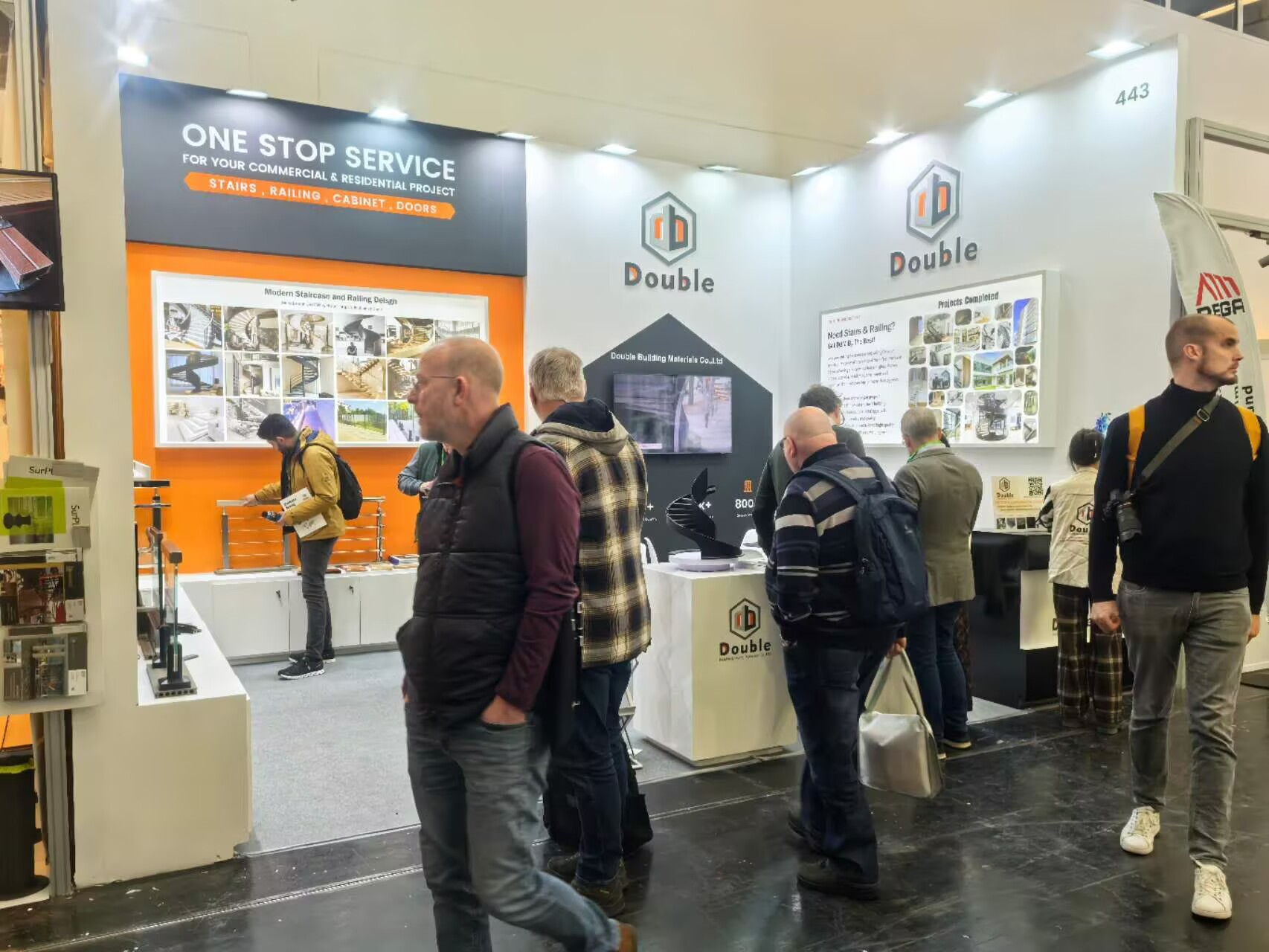
Post-BAU Follow-Up for European Projects
After BAU, send your shortlisted suppliers the same technical package:
- Project drawings with stair openings dimensioned per DIN 18065
- Required guard heights (reference the specific building use and fall height)
- EN 1090 execution class required by your structural engineer
- Whether CE marking and DoP are mandatory for the installation country
- Delivery destination and any site access constraints (European city centres often have restricted vehicle access and limited crane availability)
The supplier who responds with references to EN 1991 loading, EN 12150 glass certification, and EN 1090 execution class is the one equipped for the European market. Those who respond with IBC references or generic product catalogues without EU compliance documentation are not ready for a European installation.
Sources & Disclaimer
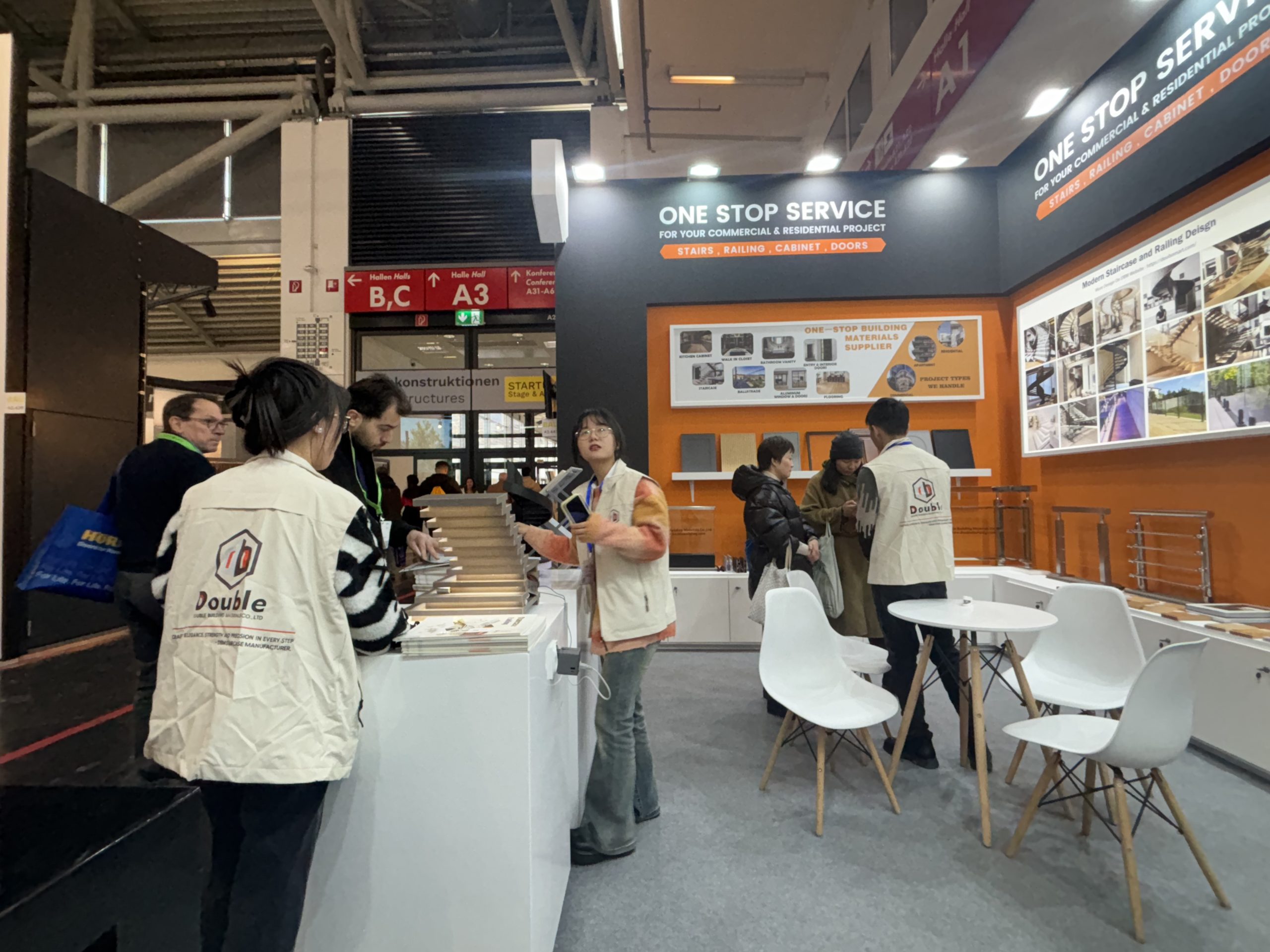
- Source material from Double Building Materials BAU exhibition records and European project documentation.
- Standard references (DIN 18065, EN 1090, EN 1991-1-1, EN 12150, CPR 305/2011) are for general guidance. National annexes may impose additional requirements.
- Event details should be confirmed against the latest BAU München official announcements.
Disclaimer: This article is published as a B2B sourcing guide. EU compliance requirements, CE marking obligations, and national building code variations should be confirmed with your project’s structural engineer and local building authority.