

Send your location + application + rough dimensions
Share the project type, site location, and basic scope. We’ll reply with a practical recommendation and quote.
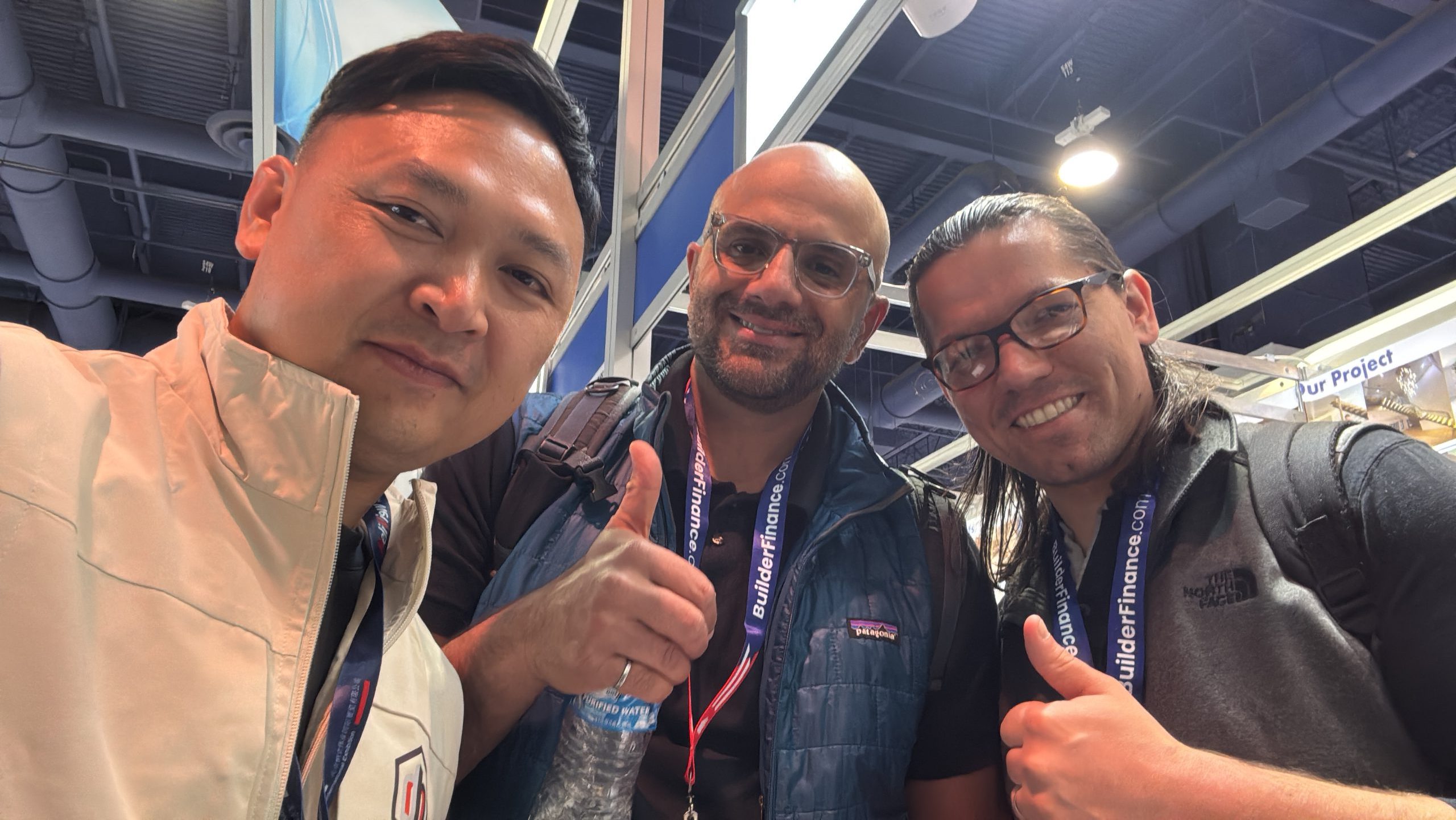
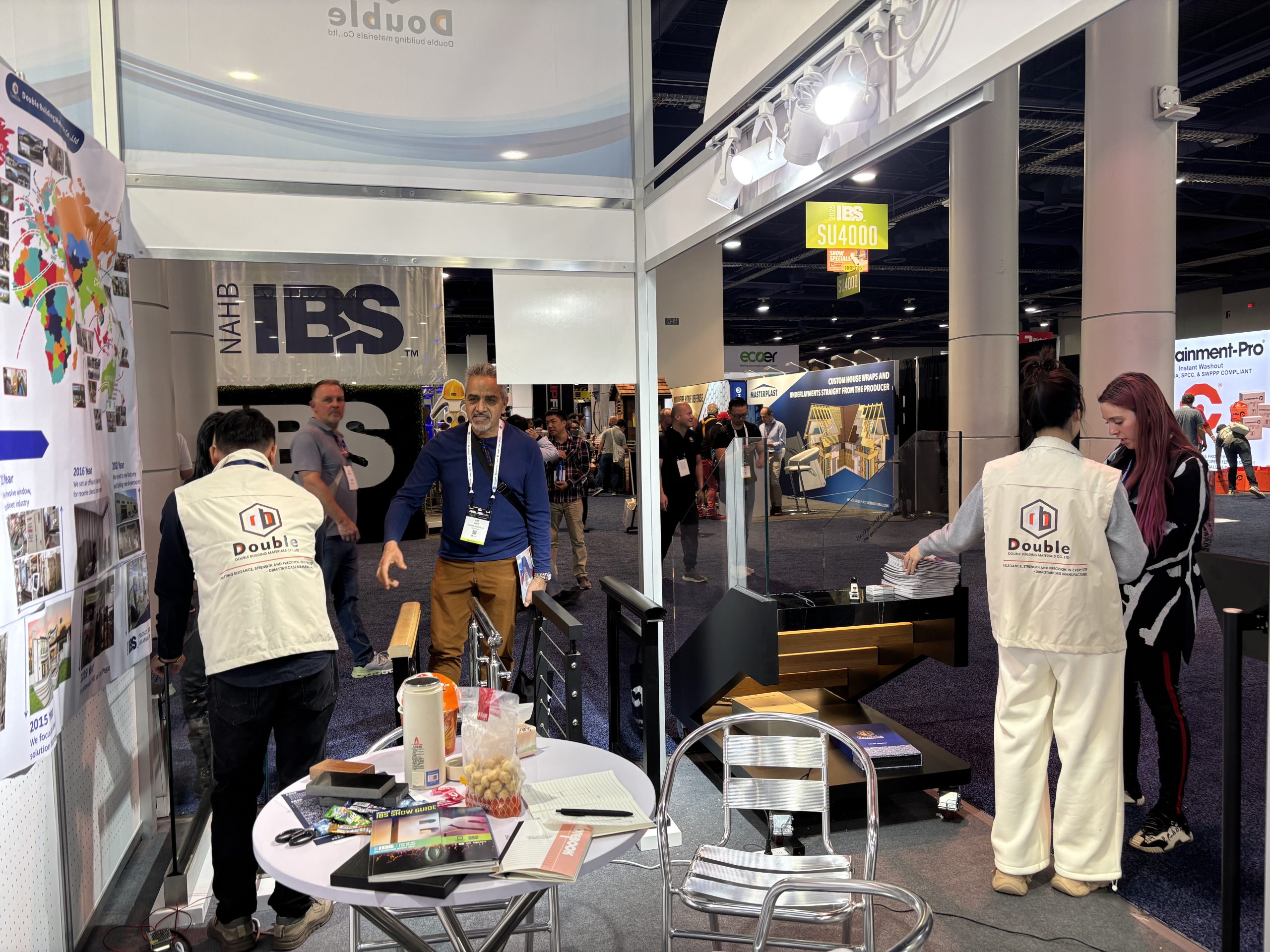
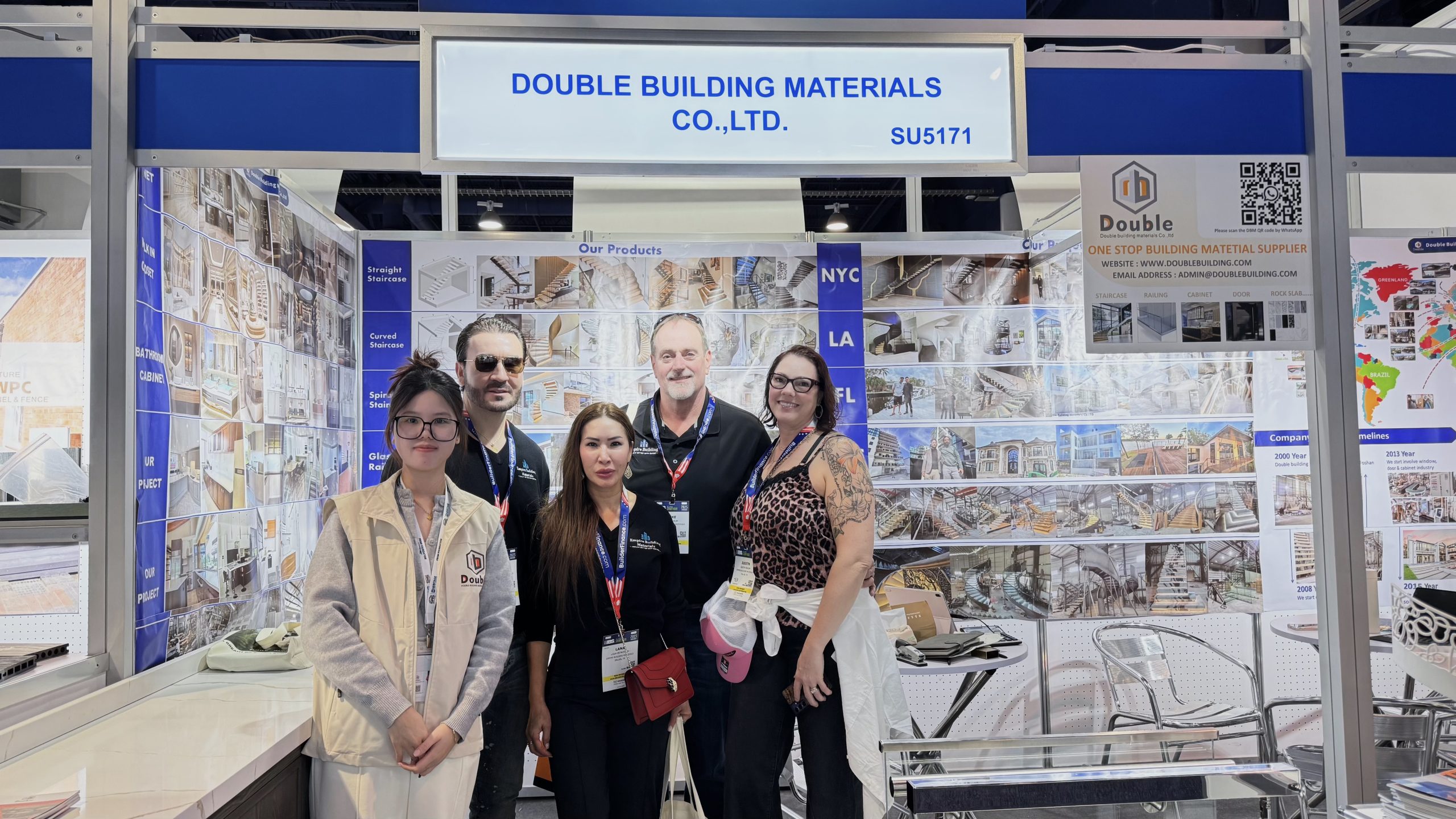
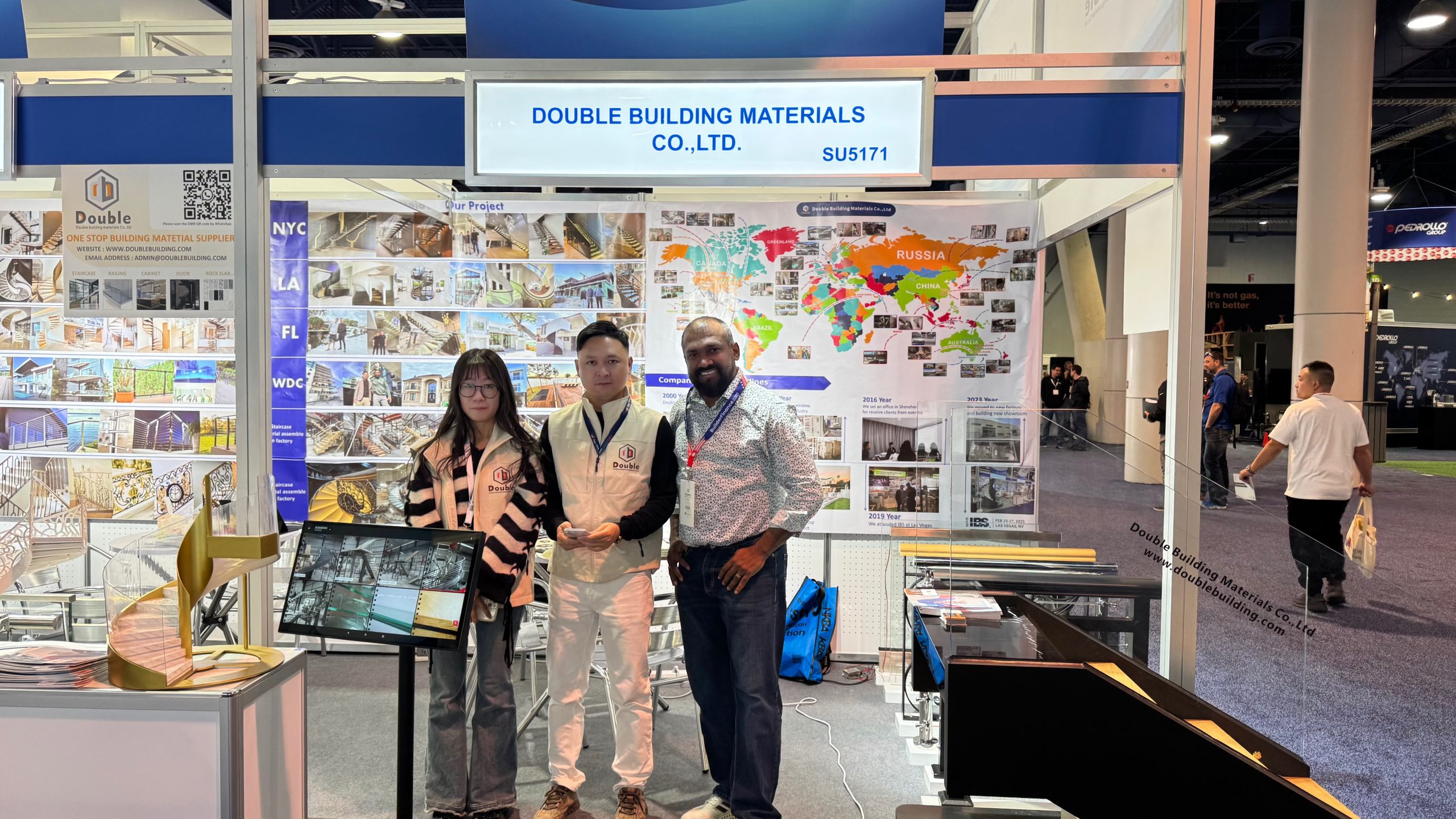
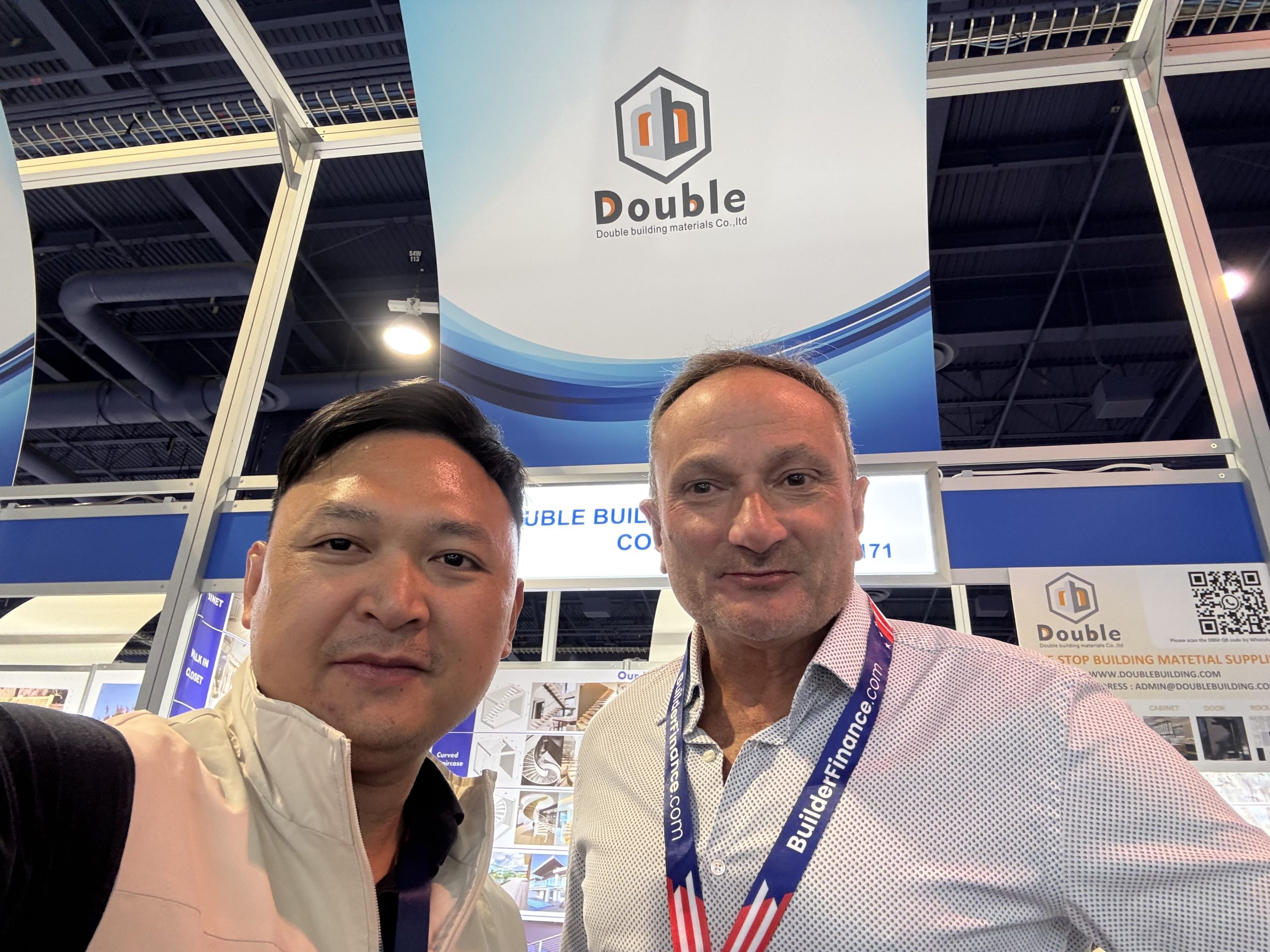
This IBS 2025 follow up covers Double Building Materials’ exhibition at the NAHB International Builders’ Show in Las Vegas. Documents the most frequent engineering conversations from the show floor, the IBC code questions US builders asked most often, and the market intelligence we gathered about current trends in residential staircase and railing specification across the American market.
This article reflects our IBS 2025 exhibition experience. Product specifications and availability may have been updated since the event. Contact us for current information.
IBS 2025: The US Residential Market in One Venue
The NAHB International Builders’ Show (Las Vegas Convention Center, February annually) is the largest residential construction trade show in North America. Unlike BAU (which skews toward architects and specifiers) or Big 5 (which serves the GCC developer market), IBS draws a predominantly builder and contractor audience — decision-makers who are evaluating products for immediate incorporation into their current and next-season project pipelines.
For staircase and railing suppliers, this audience profile shapes the conversation. IBS buyers ask practical installation questions, not theoretical engineering questions. They want to know: “Can I install this with a two-person crew in one day? What’s the lead time? Does it ship to my jobsite ready to bolt together, or do I need a welder on site?” These questions test a supplier’s understanding of American residential construction workflow — which is fundamentally different from European or commercial construction in its emphasis on speed, simplicity, and crew-size efficiency.
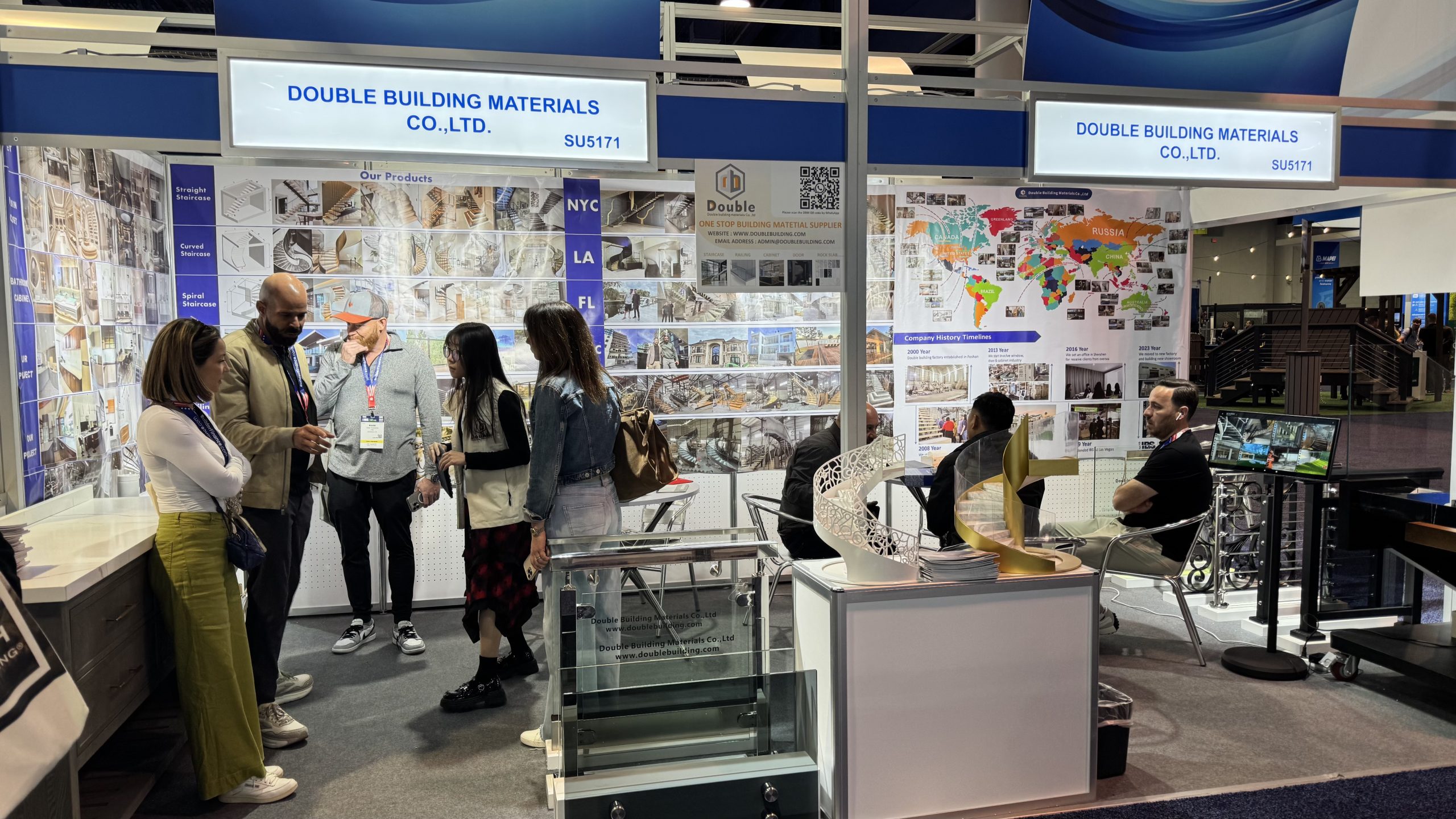
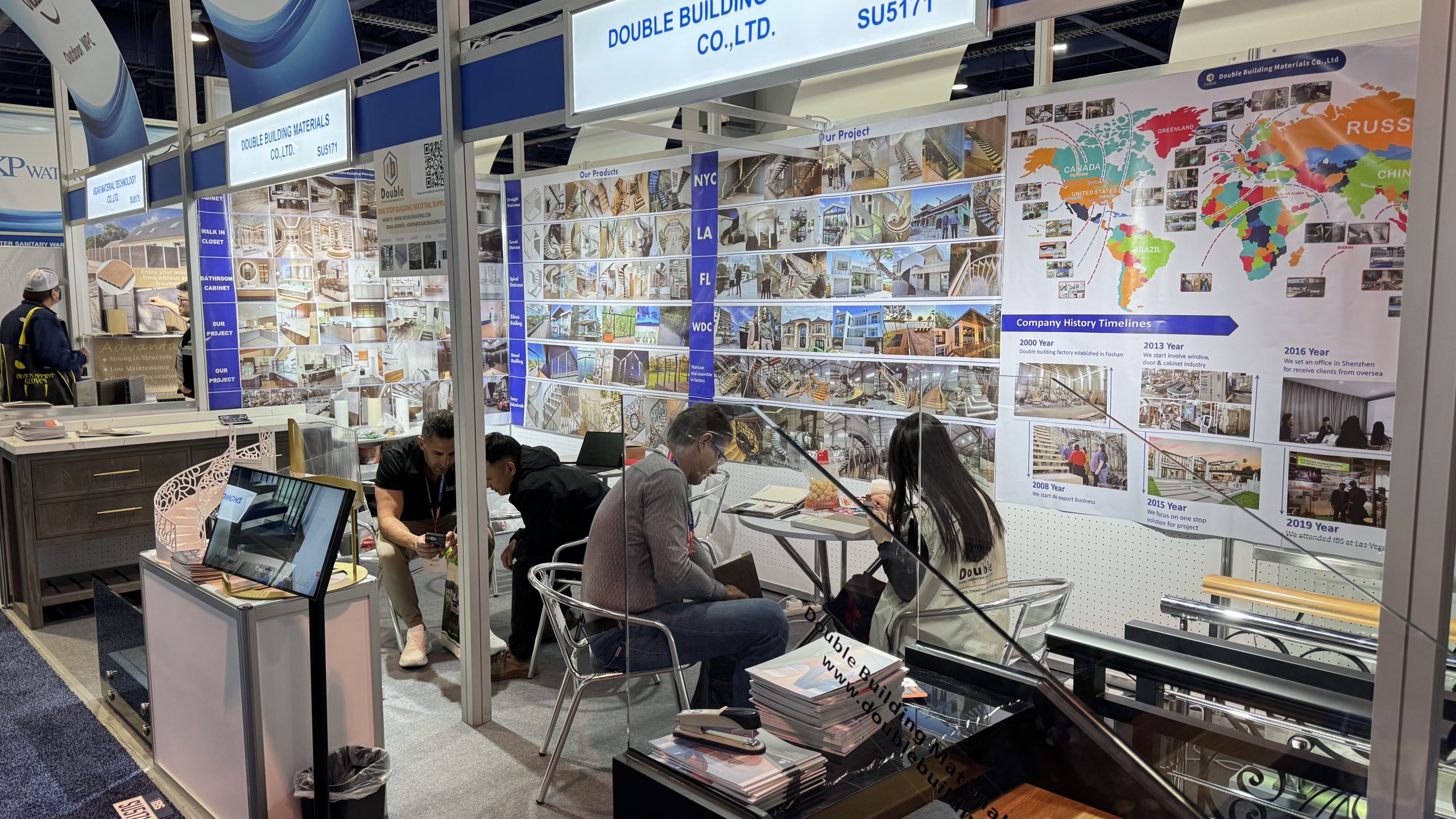
Our booth at IBS 2025 displayed the same core product lines as our BAU exhibition, but with documentation and specification language tailored to the US market. Our glass railing systems page reflects this US-market specification approach — guard heights in inches, loading in pounds, and material grades in ASTM designations.
The Top 5 Questions from US Builders
The questions at IBS 2025 revealed what American residential builders prioritize when evaluating an imported staircase or railing system:
- “Is this IRC or IBC compliant?” — US residential construction is governed by the IRC (International Residential Code), not the IBC, for one- and two-family dwellings. Guard requirements differ: IRC R312.1.1 specifies 36-inch minimum guard height for residential, while IBC §1015.3 specifies 42 inches for commercial. Builders wanted confirmation that our guard system met IRC residential requirements — not just IBC commercial specs. This distinction matters because a building inspector applying IRC will reject a 42-inch guard specified to IBC if the drawings reference the wrong code.
- “What’s the install time?” — American residential builders measure project efficiency in crew-hours. The most common benchmark question: “How many hours for a two-man crew to install a standard straight-run staircase with glass railing?” Our answer (6–8 hours for a pre-fabricated system with bolted connections) was competitive with US-fabricated alternatives, which typically require 1–2 days including on-site welding.
- “Do you provide shop drawings?” — In the US market, “shop drawings” means fabrication-level detail drawings stamped or reviewed by a licensed Professional Engineer (PE). Builders asked whether our drawing package includes PE-reviewable shop drawings or just marketing-level renderings. We provide full shop drawings with dimensions, connection details, and material callouts sufficient for PE review.
- “Can the building inspector see through the glass?” — This question, asked more often than expected, reflects a practical concern: some US building inspectors are unfamiliar with glass guard systems and may question whether tempered glass meets the 4-inch sphere infill test. Our documentation package includes a code compliance summary specifically formatted for building inspector review, referencing the relevant IRC/IBC sections.
- “What’s the landed cost to my jobsite?” — American builders think in landed cost (product + freight + duty + last-mile delivery), not FOB price. Suppliers who quote FOB China without providing a landed-cost estimate lose credibility immediately. We provide landed-cost estimates to any US address, including trucking from port to jobsite.
Three Market Trends We Observed
- Cable railing demand is plateauing; glass is growing. Multiple builders reported that cable railing — which dominated the modern residential market for the past decade — is now seen as “dated” by their buyers. Glass railing is perceived as the premium upgrade, particularly in open-plan homes where visual transparency and clean sightlines drive design decisions. This aligns with our production data: glass railing inquiries from US buyers increased approximately 40% year-over-year.
- Matte black is the dominant colour. RAL 9005 Jet Black in matte finish was requested in the majority of our IBS conversations — consistent with the current US interior design trend toward black metal hardware (door handles, lighting fixtures, stair railings) contrasting with white walls and light wood. Builders specifically asked for matte, not gloss — gloss black shows fingerprints and scratches more visibly.
- Multi-family and spec home builders are the fastest-growing segment. Individual custom home builders still attend IBS, but the volume inquiries came from multi-family developers and spec home builders looking to standardize their staircase and railing specification across 10–50+ units. For these buyers, consistency and repeatability are more important than customization — they want the same product installed identically across every unit in the development.
Common IBC Misconceptions We Corrected at the Booth
Several code misconceptions appeared frequently enough to warrant documentation:
- “Glass railing needs laminated glass.” Not true for guards. IBC and IRC allow tempered (fully toughened) glass for guard infill panels. Laminated glass is required only for glass used as a structural balustrade (where the glass itself is the primary structural element with no top rail). In a post-and-rail system with glass infill, tempered glass per ASTM C1048 is code-compliant.
- “The 200 lb load is applied to the glass.” Incorrect. The IBC 200 lb concentrated load is applied at the top of the guard rail, not to the glass infill. The glass infill must resist the 4-inch sphere test (preventing a child from passing through) and the 50 lb infill load (IBC §1607.8), but it is not the primary structural element resisting the 200 lb top-rail load — the posts and handrail carry that force.
- “ADA requires a graspable handrail on residential stairs.” ADA (Americans with Disabilities Act) applies to public accommodations and commercial facilities, not private residences. IRC residential handrail requirements (R311.7.8) are separate from ADA requirements. Builders conflating the two may over-specify or under-specify their handrail profiles.
For builders and contractors working through code compliance questions, our stair and railing coordination reference includes an IRC/IBC quick-reference card that clarifies these common misconceptions.
IBS 2025 Follow Up: Moving Forward After the Show
If we met at IBS 2025 and you’re ready to move your project forward:
- Send us your floor plan with stair opening dimensions
- Confirm whether your project falls under IRC (residential) or IBC (commercial/multi-family)
- Specify your preferred finish (RAL colour, matte or gloss)
- Provide your jobsite delivery address for a landed-cost estimate
- Tell us your project timeline — we’ll confirm whether our current lead time fits your construction schedule
We’ll respond with a complete proposal: shop drawings, material specifications, code compliance summary, and a landed-cost quote delivered to your jobsite.
Sources & Disclaimer
- Content based on Double Building Materials’ IBS 2025 exhibition experience and on-site builder conversations.
- Code references (IRC 2021, IBC 2021, ADA Standards) are for general guidance. State and local amendments may apply.
Disclaimer: This article reflects our IBS 2025 experience. Market trends and product specifications are subject to change. Contact us for current information and project-specific recommendations.