

Send your location + project type + rough dimensions
We’ll reply with a project-specific recommendation and factory-direct quote within 24 hours.
This stair railing Seattle project delivered a powder-coated steel staircase with glass guardrail panels for a residential property in Washington State. The case study covers the Pacific Northwest’s persistent-moisture climate — where 150+ annual rain days create sustained wet-dwell conditions — and how coating specification, drainage detailing, and galvanic isolation were tailored to prevent the premature corrosion failures common in Seattle’s marine-influenced environment.
Project Overview
- Location: Seattle, Washington, USA
- Products: Steel Staircase, Glass Guardrail, Powder-Coated Handrail
- Materials: Carbon Steel Frame (Q235B), 10mm Tempered Glass, TGIC Polyester Powder Coat (RAL 7016 Anthracite Grey)
- Guardrail Height: 42 in (1,067 mm) — IBC §1015.3 / Washington State Building Code
- Coating Spec: SA 2.5 prep + zinc-rich primer (25 μm) + TGIC polyester topcoat (80 μm) = 105 μm total system DFT
- Project Type: Residential
- Completed: 2023
The Challenge
Seattle’s climate is defined by moisture. The city receives rain on approximately 150 days per year, with an additional 80+ overcast days — meaning metal surfaces in Seattle are wet or damp for more than half the year. This sustained wet-dwell time is more corrosive to carbon steel than the heavy but brief rainfall of tropical climates, because the persistent moisture keeps the electrochemical corrosion process active for extended periods without the drying cycles that interrupt it.
Washington State adopts the IBC through the Washington State Building Code (WAC 51-50). Residential guardrail requirements follow IBC §1015.3: 42-inch minimum height, 200 lb concentrated top-rail load, and 4-inch sphere infill restriction. Seattle’s Department of Construction and Inspections (SDCI) reviews custom stair and railing designs as part of the permit process, with particular attention to structural connections in the city’s prevalent wood-framed residential construction.
The staircase in this project connects two levels of a contemporary residential interior with large north-facing windows — an orientation common in Seattle’s hillside neighborhoods, where homes are designed to capture views of Puget Sound and the Olympic Mountains. While the staircase is fully interior, Seattle’s residential construction often incorporates natural ventilation and large window openings that allow humid exterior air to circulate through the building, creating interior humidity levels (55–70% RH) significantly higher than air-conditioned homes in drier climates.
Project Gallery
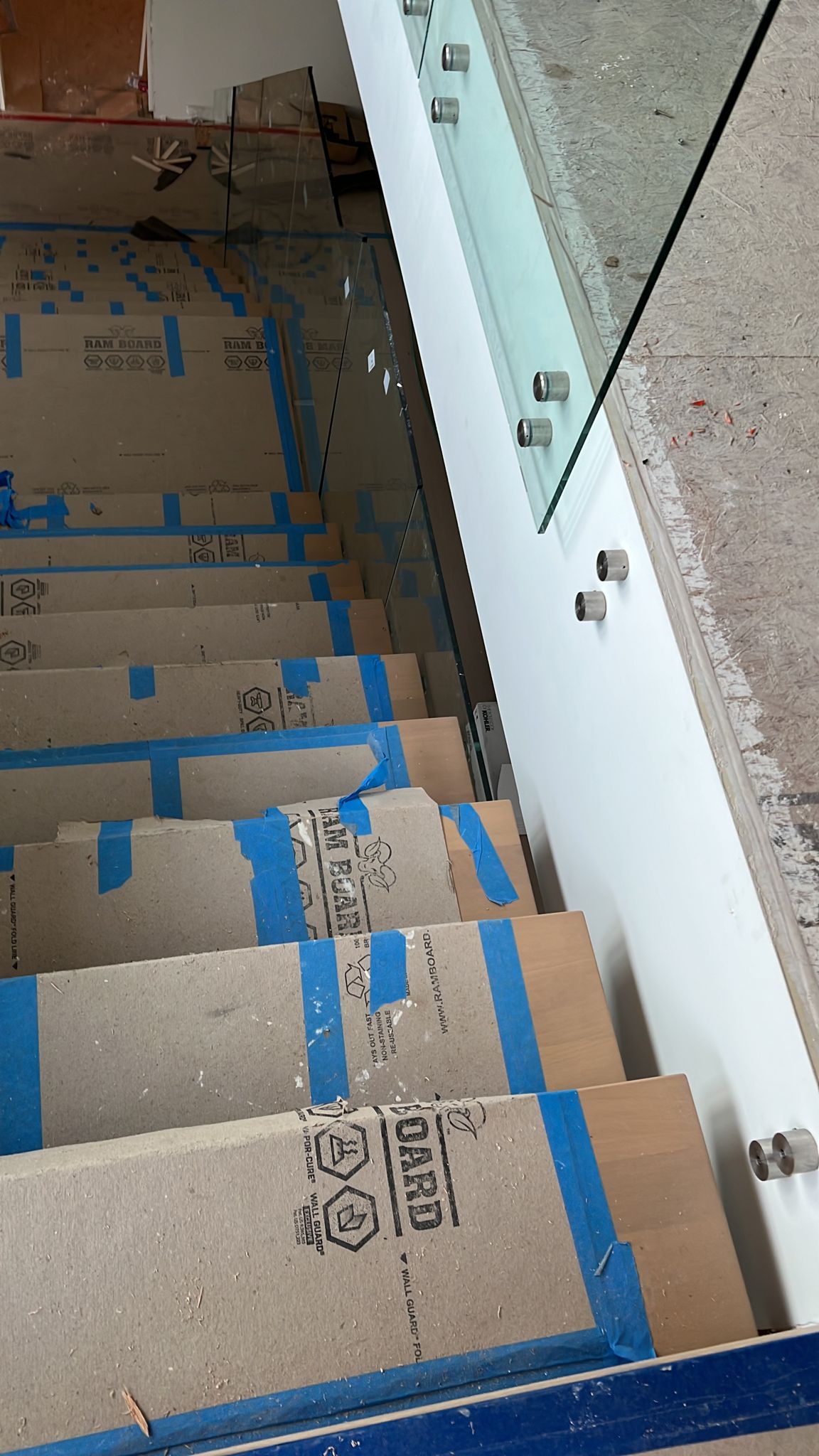
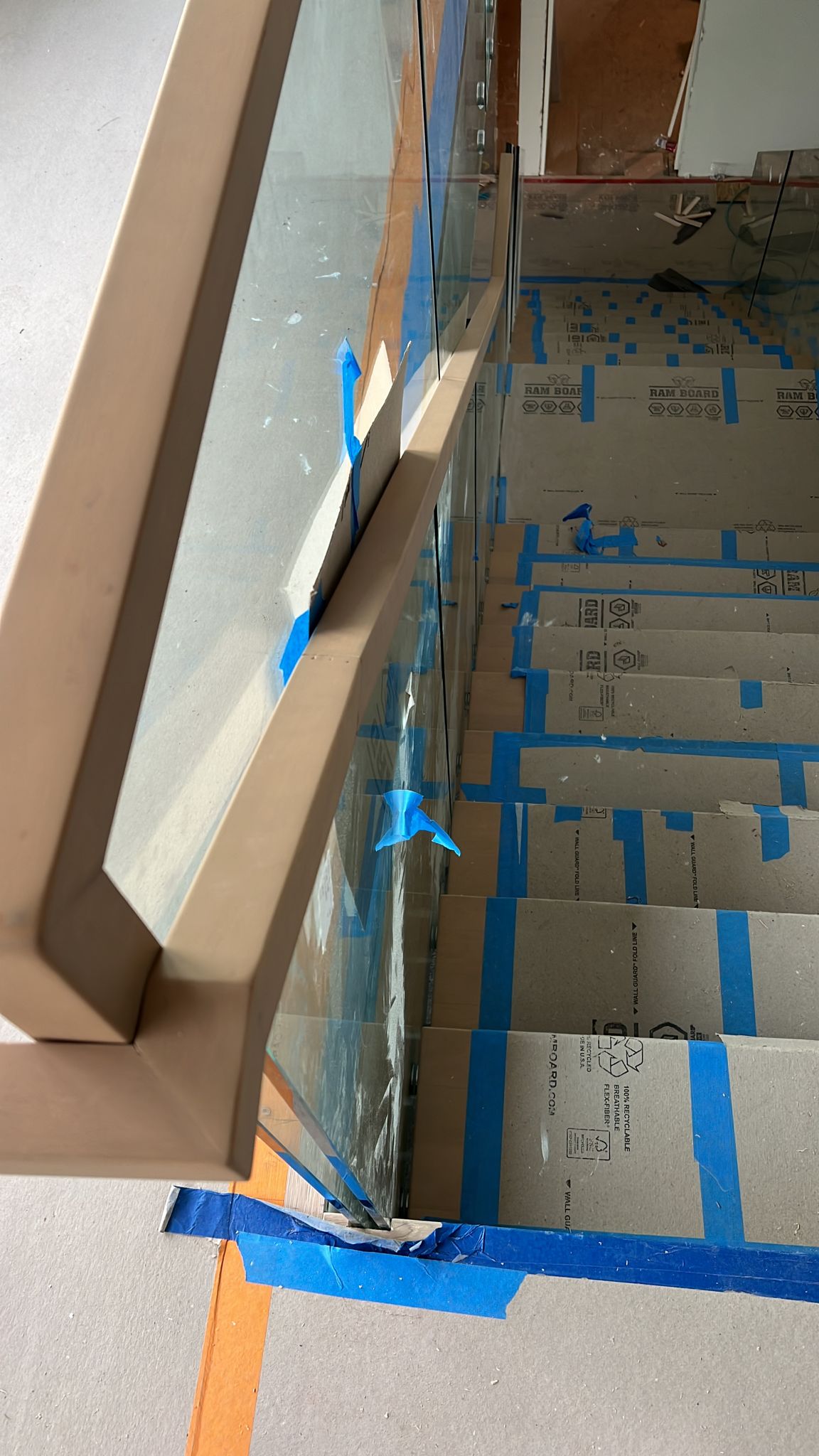
The image shows the staircase in the Seattle interior. The RAL 7016 Anthracite Grey finish was selected to complement the Pacific Northwest design palette — grey tones that reference the regional landscape (overcast skies, exposed concrete, weathered timber) rather than the stark blacks or bright whites more common in warmer-climate interiors. Our stainless steel railing systems were considered for this project but the homeowner preferred the warmer visual character of powder-coated steel — a trade-off that required the enhanced coating system described below.
Our Solution
Dual-Layer Coating System
For Seattle’s persistent-moisture environment, a single-layer powder coat over bare steel is insufficient — any pinhole or impact damage in the topcoat exposes the steel substrate directly to moisture, initiating corrosion beneath the coating. We specified a dual-layer system:
- Layer 1 — Zinc-rich primer: 25 μm of zinc-rich epoxy primer applied over SA 2.5 blast-cleaned steel. The zinc acts as a sacrificial anode — if the topcoat is damaged, the zinc corrodes preferentially, protecting the underlying steel. This cathodic protection mechanism provides an active corrosion barrier that continues working even after physical damage to the outer layer.
- Layer 2 — TGIC polyester topcoat: 80 μm of TGIC polyester powder coat in RAL 7016. The TGIC chemistry provides superior moisture resistance and UV stability compared to standard polyester. Total system DFT: 105 μm.
Drainage Detailing
Water traps are the primary corrosion risk in fabricated steel assemblies. Any horizontal surface, joint, or pocket where water can collect and sit creates a localized corrosion cell. We detailed the staircase to eliminate water traps:
- All horizontal surfaces (tread brackets, stringer flanges) include a minimum 3° drain slope so condensation runs off rather than pooling.
- All tube sections (handrail, stringer) have sealed end caps to prevent moisture ingress into hollow members — internal corrosion inside a sealed tube is invisible until structural failure occurs.
- Base plate connections include 3 mm neoprene isolation pads between the steel plate and the concrete/timber substrate, preventing capillary moisture from wicking into the joint.
Glass Guardrail
- 10mm tempered glass: ASTM C1048 compliant, held by powder-coated steel spigots with EPDM gaskets. The gaskets provide galvanic isolation between the glass and the steel hardware, and the EPDM material (rated for continuous moisture exposure) will not degrade in Seattle’s humidity.
- Guard height: 42 inches from the nosing line, with infill preventing passage of a 4-inch sphere.
Delivery & Installation
Seattle delivery via Port of Tacoma, with total transit approximately 25 days. The staircase was shipped in a sealed container with desiccant packs — an important precaution for Seattle-bound cargo, as the containers can accumulate internal condensation (container rain) during the Pacific crossing, potentially causing surface staining on unprotected steel.
- Installation timing: Scheduled during Seattle’s dry season (July–September) to minimize moisture exposure during the installation phase, when bolt holes and splice joints are temporarily open to the atmosphere.
- Touch-up protocol: Any field-drilled holes or installation scratches received immediate touch-up with zinc-rich cold galvanizing spray before the TGIC topcoat touch-up paint — maintaining the dual-layer protection system at every fastener location.
For projects in high-moisture climates where coating system integrity is a primary durability concern, our stair and railing coordination reference includes dual-layer coating specifications and field touch-up protocols for powder-coated steel assemblies.
The Result
The completed staircase delivers a warm, contemporary presence in the Seattle interior, with the RAL 7016 Anthracite Grey finish providing a material tone that integrates naturally with the Pacific Northwest design vocabulary. The dual-layer zinc-plus-TGIC coating system provides long-term protection against Seattle’s persistent moisture — a specification that adds approximately 15% to the coating cost versus single-layer powder coat, but extends the expected maintenance-free life from 5–7 years to 15–20 years in this environment.
The drainage detailing and sealed construction prevent the water-trap corrosion that is the most common failure mode for fabricated steel in the Pacific Northwest. The staircase meets IBC §1015.3 as adopted by Washington State: 42-inch guard height, structural loading compliance, and code-compliant glass infill.
Sources & Disclaimer
- Project documentation and photography from Double Building Materials internal records.
- Coating specifications verified against AAMA 2604 (high-performance powder coat) and SSPC-SP10/NACE No. 2 (near-white blast cleaning).
- Building code references (IBC 2021, WAC 51-50) are for general guidance only. Always confirm with Seattle SDCI.
Disclaimer: This case study is published for informational and portfolio purposes. Actual specifications vary by project. Contact us with your climate zone and exposure details for a tailored coating recommendation.